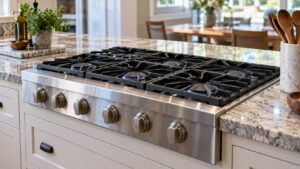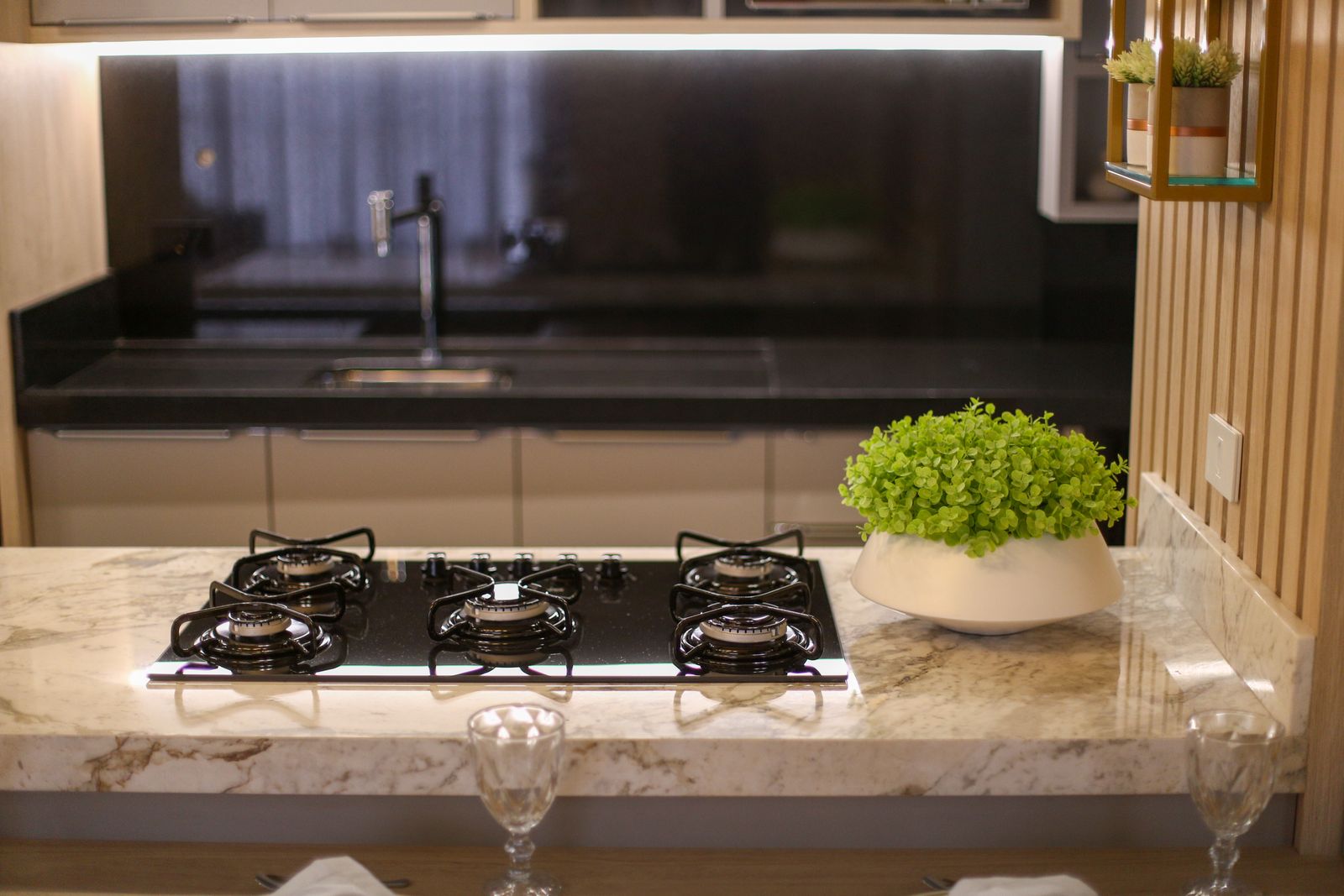
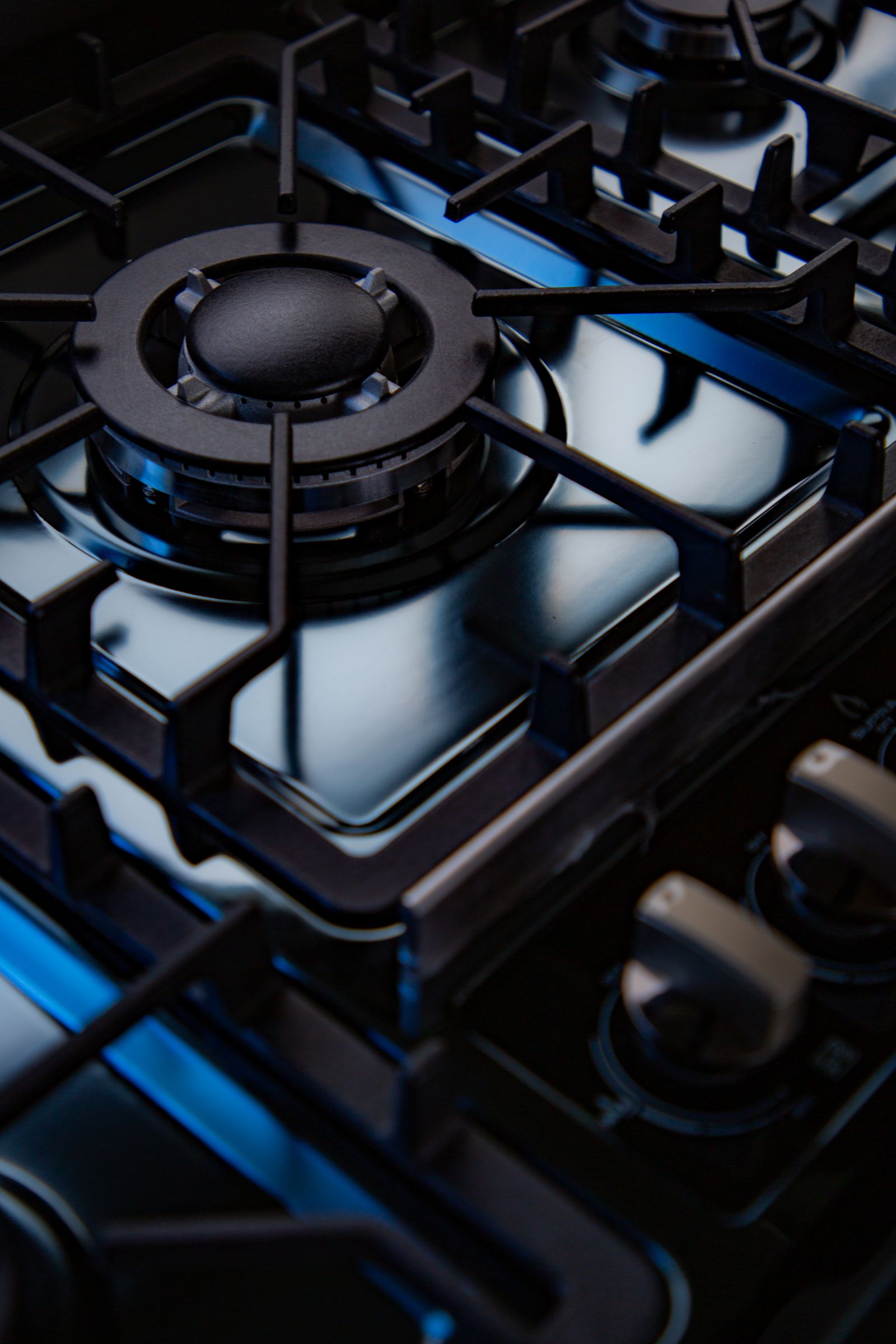
When a miele rangetop burner won’t stay lit, remember that KMR rangetops are gas-only with no display and no error codes, so every diagnosis is symptom-led from the burner outward.
Miele KMR rangetops are gas, cooktop-only units with no display and no error codes, so every diagnosis is symptom-led: you confirm gas and power, then work through the igniter, the series-wired spark harness, the burner caps, and the flame itself. We start with the everyday causes you can check yourself, then explain the signs that point to a part that genuinely needs a hands-on repair.
What a miele rangetop burner won’t stay lit usually means
A rangetop burner holds a flame only with a clean igniter, a correctly seated cap, and clear ports. After spills or cleaning, a wet igniter or a misaligned cap stops the flame establishing. The M Pro burners share a series-wired spark harness, so one wet switch can disrupt several burners at once.
First checks you can do
Start with the checks you can safely do yourself. Each one rules out a common, inexpensive cause, and together they resolve the majority of cases without a service visit:
- Dry the burner fully after any spill or cleaning before retrying.
- Reseat the burner cap squarely and evenly on its base.
- Clear the burner ports with a pin so gas flows evenly.
- If several burners misbehave, dry them all — the spark harness is shared.
Take these in order and test whether the problem has cleared before moving to the next. If you do end up needing help, having worked through them gives the technician a useful head start.
Common symptoms and what they point to
Matching the exact symptom to its likely cause is how you avoid replacing the wrong part. Compare what you are seeing to the patterns below:
- Lights then dies — a wet/dirty igniter or a misseated cap.
- Clicks but no spark — moisture or a fouled igniter.
- Weak or yellow flame — a clogged port or a cap out of position.
- Several burners affected — the shared series-wired spark harness.
If more than one pattern fits, start with the simplest cause and confirm it is clear before moving on, so no part is bought before the diagnosis is certain. The aim is to narrow the field down to a single likely cause, because that is what turns an open-ended problem into a quick, affordable fix.
When it is a problem, not a habit
If the everyday checks above do not resolve it, the problem has likely moved from something you can adjust to a component that needs testing or replacing. These are the signs that point that way:
- The burner is clean, dry, and seated but still will not stay lit — the spark module, igniter, or a flame-safety valve may be faulty.
- A damaged spark harness can disable several burners together.
- A simmer or griddle module that misbehaves may need its own service check.
At this point a proper diagnosis beats guesswork, since the remaining causes involve a specific part or electrical testing. An experienced technician can meter the suspect component and fit a genuine Miele part so the repair lasts.
Putting it together
Work the checks above in the order given. Most Miele rangetop problems of this kind clear at one of the early, owner-checkable steps; the ones that do not point to a specific part and are worth a proper diagnosis rather than guesswork. Move from the simplest cause outward, confirm each step before the next, and treat a returning code or a lingering symptom as your cue to bring in help. A little routine care afterwards prevents most repeat calls, since Miele builds these rangetops to a high standard.
Related reading: Miele rangetop burner won’t ignite, Miele KMR rangetop buying guide, and our rangetop repair service.
Book Miele rangetop service
If these steps do not resolve it, our experienced technicians repair Miele rangetops with genuine parts and a 30-day labor guarantee. Schedule a visit, see what our rangetop repair service covers, or confirm your model details on the manufacturer’s site at mieleusa.com.