Miele twindos is the automatic liquid-detergent system on W1 washers: it doses the correct amount of detergent at the optimal moment in each cycle, so you do not measure or pour detergent every load.
Miele W1 washers use a Honeycomb drum and report service error codes paired with plain-English messages like ‘Drainage problem’ or ‘Waterproof system activated’, so reading the exact code plus the message usually points straight at the subsystem responsible. We start with the everyday causes you can check yourself, then explain the signs that point to a part that genuinely needs a hands-on repair.
What a miele twindos usually means
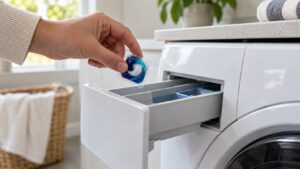
TwinDos holds two cartridges — UltraPhase 1 and UltraPhase 2 — and releases each at the point in the wash where it works best. The washer tracks how much is left and prompts a refill. CapDosing complements it with single-use caps for fabric conditioner, boosters, or specials, dropped into the dispenser drawer.
Understanding how this works pays off in two ways. First, it sets the right expectations, so you can tell the difference between normal behavior and a genuine problem instead of calling for service over something that is working as designed. Second, when something does go wrong, knowing the underlying mechanism helps you describe the symptom accurately and points you and the technician toward the right part faster. The details below explain the principle in plain terms, then translate it into what you will actually notice day to day.
Common symptoms and what they point to
Matching the exact symptom to its likely cause is how you avoid replacing the wrong part. Compare what you are seeing to the patterns below:
- TwinDos doses automatically; you only refill the UltraPhase cartridges when prompted.
- You can still add your own detergent to the drawer when you prefer a different product.
- CapDosing caps handle one-off needs like conditioner or sportswear care.
- UltraPhase and CapDosing are Miele consumables designed for the system.
Read these as a practical summary rather than a strict checklist. The thread running through them is that Miele engineers these systems to behave predictably, so once you know the principle, the day-to-day signs make sense and you can act on the right one. Keep the verified details in mind — especially any point that corrects a common misconception — and you will make better decisions about use, upkeep, and when a repair is actually warranted.
Getting it right for the long run
It is worth separating the feature from the problems that can affect it. The technology itself is reliable, but it still depends on the basics being right — clean filters and vents, a good door seal, the correct settings, and steady power. When one of those slips, the feature can appear to misbehave when the real cause is elsewhere. So if something seems off, check the fundamentals first and only then suspect the feature or its dedicated parts, which is the same logic a Miele technician applies on a service call.
Putting it together
Work the checks above in the order given. Most Miele washer problems of this kind clear at one of the early, owner-checkable steps; the ones that do not point to a specific part and are worth a proper diagnosis rather than guesswork. Move from the simplest cause outward, confirm each step before the next, and treat a returning code or a lingering symptom as your cue to bring in help. A little routine care afterwards prevents most repeat calls, since Miele builds these washers to a high standard.
Related reading: Miele washer care tips, Miele washer models, and our washer repair service.
Book Miele washer service
If these steps do not resolve it, our experienced technicians repair Miele washers with genuine parts and a 30-day labor guarantee. Schedule a visit, see what our washer repair service covers, or confirm your model details on the manufacturer’s site at mieleusa.com.