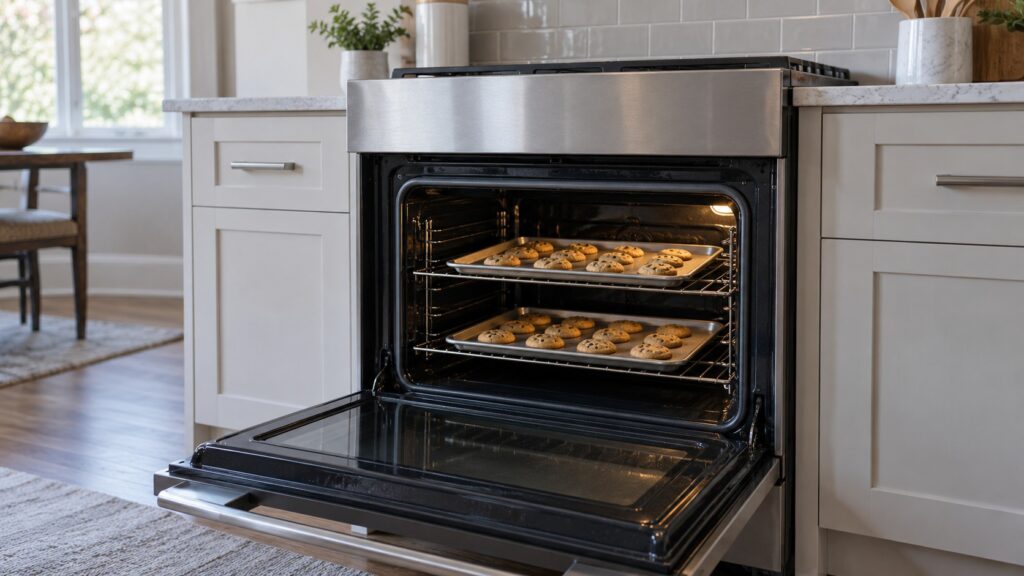
Miele TwinPower convection is the oven system in Miele HR ranges that moves heated air around the cavity with a fan, so the heat reaches every rack evenly instead of sitting in layers. A conventional bake relies on the elements alone and leaves hot and cool zones; a convection oven circulates the air, which cooks faster, browns more evenly and lets you bake on more than one rack at once. The model list shows TwinPower on the gas, dual fuel and induction versions of the HR range.
What is Miele TwinPower convection?
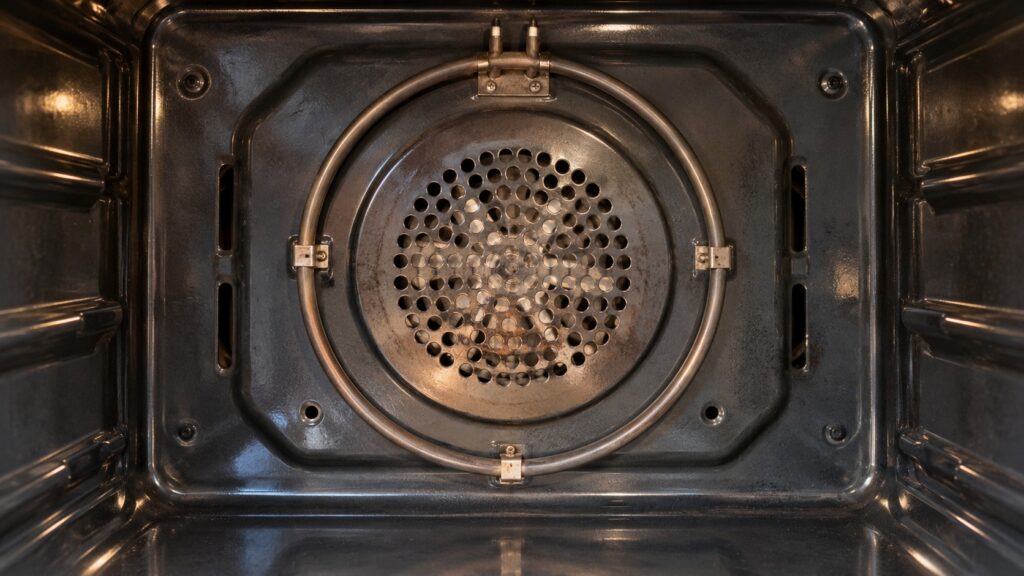
TwinPower is the name Miele uses for the convection system in the oven of its HR freestanding ranges. A fan at the back of the cavity moves the air that the heating elements warm, and the moving air carries heat to the food from every side. On our model list it appears on the 30-inch and 36-inch gas HR ranges, the dual fuel HR 1954-3 G DF and the induction HR ranges, so the same oven concept sits under different cooktops. The name does not change the principle, which is the one every convection oven uses, but it tells you that this oven is designed around circulation rather than still air.
The practical effect is easy to see. A tray of cookies on a still-air oven shelf browns on the side nearest the element and stays pale on the other; with circulating air the whole tray colors together. The same goes for a roast, where the surface browns while the inside cooks through.
How is convection different from a conventional bake?
In a conventional bake the heat comes from the elements and spreads by radiation and slow natural air movement. Layers of hotter and cooler air form, so food on the top rack cooks faster than food at the bottom, and a pan placed near the door gets less heat than one near the back. A convection fan breaks those layers up, so every rack sees almost the same temperature, and it strips the thin layer of cool, moist air that clings to food, which is why surfaces crisp.
Heat that is moved efficiently also means less wasted energy, because the oven reaches a given result at a lower setting. That is also why convection is faster. Moving air passes heat to the food more efficiently than still air, so a roast usually finishes sooner and a tray of vegetables caramelizes without turning leathery. The trade is that delicate batters can dry or set unevenly if you do not adjust, which is why recipes often call for a lower temperature.
How should you adjust recipes for a convection oven?
- Lower the temperature by about 25 degrees Fahrenheit from a recipe written for a conventional oven, unless the recipe says it is for convection.
- Check the food early, around three quarters of the stated time, since convection often finishes sooner.
- Use low-sided pans and sheets so air can reach the food; a tall-sided dish blocks the flow.
- Leave space between pans and do not cover the racks with foil, which blocks circulation.
- Use two racks for cookies and vegetables, and swap them halfway only if your tray colors unevenly.
Cakes and soufflés are the ones to watch, because a strong airflow can set the top before the inside has risen. Use a conventional mode for those if your oven offers it. For general oven habits, see our Miele range tips and oven tips.
How does TwinPower work with Moisture Plus and MasterChef?
The HR ranges on our list combine the convection system with Moisture Plus, which adds bursts of steam during baking so bread and pastries get a crisp crust and a moist center, and with MasterChef programs, which choose the mode, temperature and time for a dish. Convection supplies the even heat, steam supplies the moisture and the program ties them together. If you want to see how the steam side works, read our Moisture Plus glossary, and for the programs see how Miele MasterChef works.
What if the oven bakes unevenly or the fan sounds wrong?
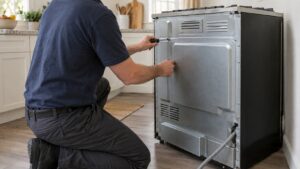
Uneven baking in a convection oven almost always comes from a blocked airflow or an oven that is not level, not from a fault in the fan. Check that nothing covers the rear fan area, that racks are in the positions the manual recommends and that the range is level front to back and side to side. A fan that rattles can have a bent blade or loose fixing, and one that grinds or stops can mean a failing motor. Do not use the oven if the fan makes a loud grinding noise. Our guide to a Miele range oven not heating covers the heating side, and the uneven cooking page lists what to check.
Which Miele HR range suits you?
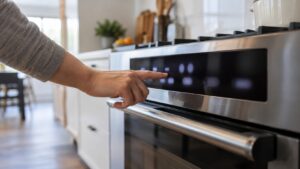
The oven concept is shared, so choose on the cooktop and the size: gas for open flame, dual fuel for gas on top with an electric oven below or induction for speed and a cool surface. Our Miele HR range buying guide compares them, and the range installation guide lists the gas, electrical and clearance requirements.