Knowing how to miele washer descale routines work matters most in hard-water areas, where limescale builds on the heating element and slowly reduces efficiency and can contribute to heating problems.
Miele W1 washers use a Honeycomb drum and report service error codes paired with plain-English messages like ‘Drainage problem’ or ‘Waterproof system activated’, so reading the exact code plus the message usually points straight at the subsystem responsible. We start with the everyday causes you can check yourself, then explain the signs that point to a part that genuinely needs a hands-on repair.
What a miele washer descale usually means
Hard water leaves limescale on the heating element and drum. A periodic descale with a proper washing-machine descaler dissolves that scale, restoring heating efficiency and preventing the gradual decline that can end in an F20 heating problem. It also helps control the musty odour that scale and residue encourage.
First checks you can do
Start with the checks you can safely do yourself. Each one rules out a common, inexpensive cause, and together they resolve the majority of cases without a service visit:
- Use a descaler intended for washing machines, following its dose on an empty hot cycle (do not use it with laundry).
- Run a hot maintenance wash (around 140-194°F) regularly to clear detergent and grease buildup.
- Clean the drain pump filter behind the lower flap so debris does not collect.
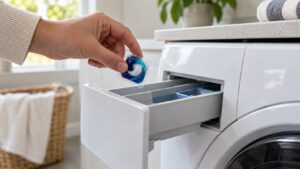
- Pull out and wash the detergent drawer to clear softener sludge and mould.
Take these in order and test whether the problem has cleared before moving to the next. If you do end up needing help, having worked through them gives the technician a useful head start.
When it is a problem, not a habit
If the everyday checks above do not resolve it, the problem has likely moved from something you can adjust to a component that needs testing or replacing. These are the signs that point that way:
- A washer that stops heating after years in a hard-water area may have a scaled or failed element.
- Persistent odour after descaling points to residue in the drum seal or sump.
- Heavy scale can also affect the level/pressure sensor tube.
At this point a proper diagnosis beats guesswork, since the remaining causes involve a specific part or electrical testing. An experienced technician can meter the suspect component and fit a genuine Miele part so the repair lasts.
Getting it right for the long run
None of these tasks requires special equipment or much time — the value is in doing them consistently rather than waiting for a problem. Build them into a simple schedule and they stop feeling like chores, while the appliance rewards you with steadier performance, fewer odours and blockages, and a longer life. A neglected filter, vent, or seal is behind a surprising share of service calls, and every one of those is the kind of problem this routine quietly prevents. If you ever notice a new noise, smell, or drop in performance, treat it as early feedback worth acting on.
Putting it together
Work the checks above in the order given. Most Miele washer problems of this kind clear at one of the early, owner-checkable steps; the ones that do not point to a specific part and are worth a proper diagnosis rather than guesswork. Move from the simplest cause outward, confirm each step before the next, and treat a returning code or a lingering symptom as your cue to bring in help. A little routine care afterwards prevents most repeat calls, since Miele builds these washers to a high standard.
Related reading: Miele washer not heating (F20), Miele washer care tips, and our washer repair service.
Book Miele washer service
If these steps do not resolve it, our experienced technicians repair Miele washers with genuine parts and a 30-day labor guarantee. Schedule a visit, see what our washer repair service covers, or confirm your model details on the manufacturer’s site at mieleusa.com.