The Miele dishwashers lineup
Miele dishwashers are built-in cleaning appliances split into two tiers: the flagship G 7000 series and the entry G 5000 series. The G 7000 range runs from the panel-ready G 7966 SCVi and G 7591 SCVi through the G 7316 SCU and G 7156 SCVi, while the G 5000 range covers the G 5266 SCVi SF, G 5056 SCVi, G 5008 SCU, and the slimline 18″ G 5482 SCVi SL. Most are 24″ panel-ready (Vi/SCVi) or stainless-front builds. You can review the current range on the manufacturer’s site at mieleusa.com and the units we service in our model directory.
Miele dishwashers technologies that matter
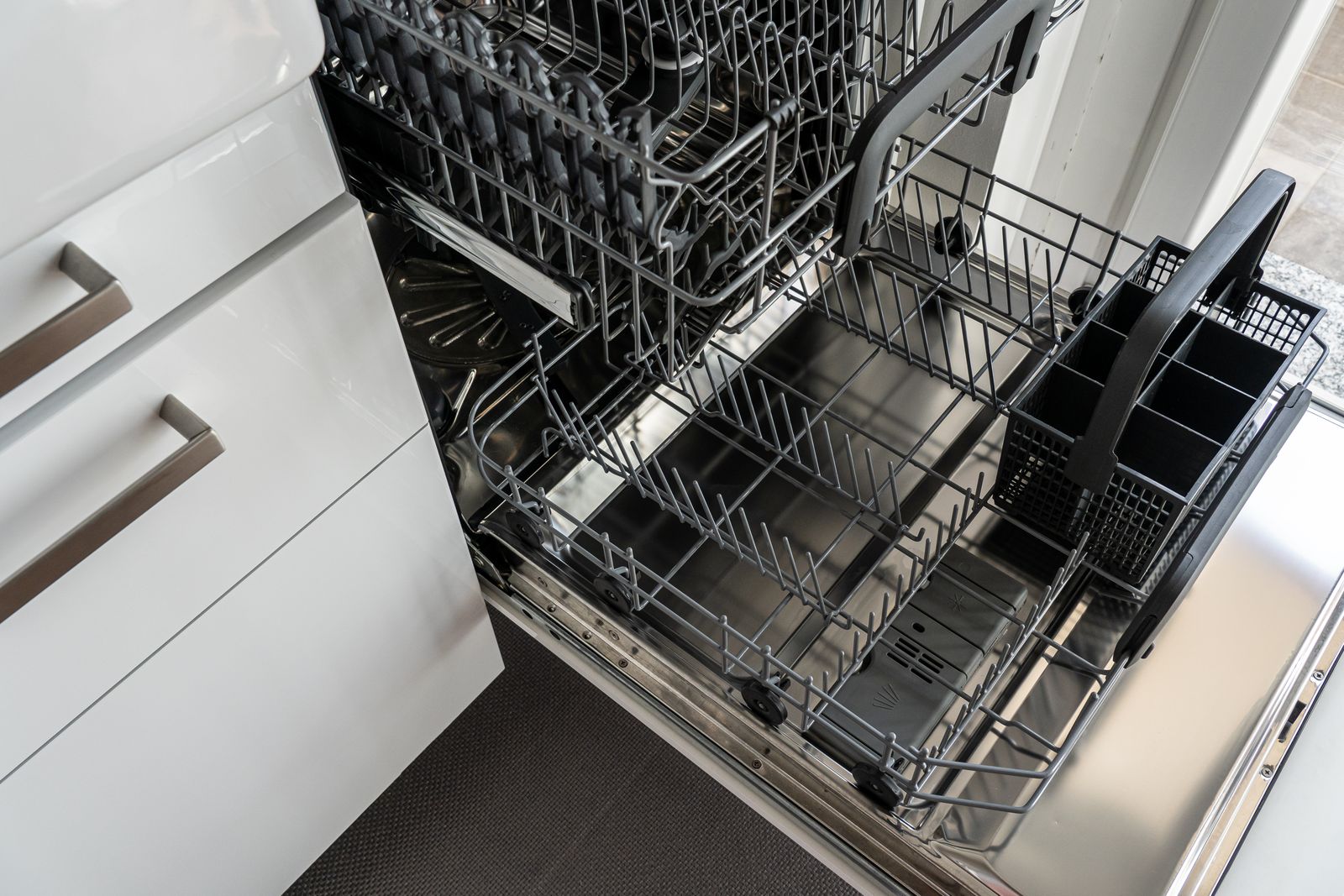
The strengths of a Miele dishwasher come from its dosing, wash, and dry systems. AutoDos with the PowerDisk automatically dispenses the right amount of detergent across cycles, while QuickPowerWash delivers a fast, full-quality wash. AutoOpen drying cracks the door at the end of the cycle to let dishes air-dry, the 3D MultiFlex tray and FlexLine racking flex around tall and awkward items, and EcoPower trims water use. The flagship G 7000 adds Knock2open for fully integrated panels with no handle, plus M Touch or DirectSelect controls and BrilliantLight, while the G 5000 keeps things simpler at a slightly higher sound rating. Because the wash pump, drain pump, inlet valve, AutoDos dispenser, heater, and water softener vary by model, parts matched to your G-series number are essential for a lasting repair.
Common Miele dishwasher problems and codes
Miele dishwashers display F-codes when a circuit or component misbehaves. The faults we see most often:
- F11 — drainage fault (filter, drain hose, or drain pump).
- F12 / F13 — water intake fault (supply, inlet screen, or inlet valve).
- F24 / F25 — heating fault (relay contact or heating/temperature).
- F32 / F33 — door auto-close or door-lock fault.
- F70 — water in the base, caught by the Waterproof System.
- F86 / F87 / F88 — salt lid, water softener, or turbidity sensor (often DIY-friendly).
For meanings and next steps, see our Miele dishwasher error codes.
Maintenance essentials
- Clean the base filter regularly so F11 drainage faults do not return.
- Refill the AutoDos PowerDisk and the rinse-aid and salt reservoirs on time.
- Wipe the spray-arm jets clear of food and hard-water scale.
- Run a maintenance/clean program to clear grease and limescale.
- Check the door seal so the cabinet stays watertight.
Choosing the right Miele dishwasher for your kitchen
Choosing among Miele dishwashers comes down to integration, dosing, drying, and noise. Integration is the headline difference: a fully integrated panel-ready Vi model disappears behind a custom cabinet front, and on the flagship G 7000 the handle-free Knock2open lets the door open at a knock, while an SCU model shows a stainless front and a visible control strip. Automatic dosing is the next decision — the AutoDos system with the PowerDisk meters detergent for you across cycles, where an entry model relies on manual tabs. Drying matters too, since the heat-assisted AutoOpen system cracks the door to finish dishes dry without an exposed heating element. Finally, sound rating separates the tiers: the G 7000 runs near 38 dBA, quiet enough for an open kitchen, while the G 5000 sits a few decibels higher. Racking flexibility, the 3D MultiFlex tray, and FlexLine tines decide how easily stemware, large pots, and odd items fit. Confirming whether you own a G 7000 or a G 5000 model, and its panel style, helps a technician bring the correct rack, dispenser, latch, or control part.
When to call for Miele dishwasher repair
Wash and drain pumps, inlet valves, AutoDos dispensers, heaters, and control boards are best handled by experienced technicians who can read the codes and fit Miele-specific parts from trusted suppliers. Note the exact code and your G-series model number when you book. Diagnostic visits start from $129, with a labor guarantee on the workmanship; the total depends on parts and configuration. Schedule Miele dishwasher repair, browse our repair guides, or book an appointment online.