The Miele dryers lineup
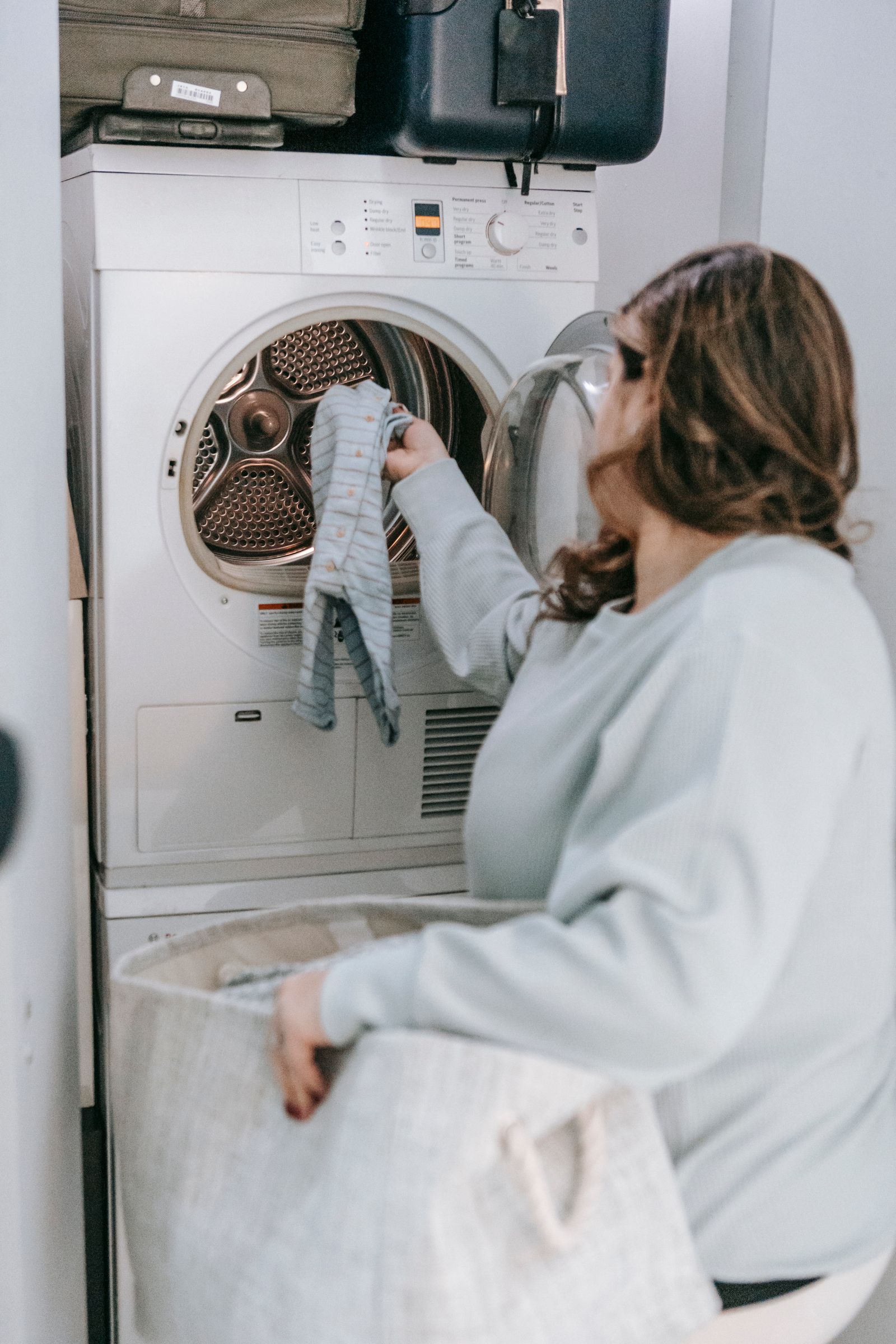
Miele dryers in the US are all T1 heat-pump models, every one a 24″ compact unit that plugs into a standard 120V/15A household outlet — no 240V circuit and no exterior vent required. The lineup includes the flagship TXR860 WP, the TXI680 WP, the TXD160 WP, and the TWB120 WP, along with the TWF160 WP and TWI180 WP. Each is designed to pair beside or stack on a matching Miele W1 washer to form a compact laundry column. You can review the current range on the manufacturer’s site at mieleusa.com and the models we service in our model directory.
Miele dryers technologies and EcoDry
A Miele dryer’s performance rests on its heat-pump design. The EcoDry heat-pump system recycles heat through a condenser instead of venting it, which is what lets the dryer run on a normal 120V outlet with no duct and use far less energy. PerfectDry measures residual moisture and the local water hardness to stop the cycle at exactly the right point, the patented Honeycomb drum treats fabrics gently, and FragranceDos adds an optional scent flacon for fresh-smelling laundry. SteamFinish relaxes creases, and FilterClean simplifies lint maintenance. Because the condenser unit, moisture sensor, drum motor, condensate pump, and control board are specific to the heat-pump platform, parts matched to your T1 model number are essential for a correct repair.
Common Miele dryer problems and codes
Miele dryers report a short set of codes and a few plain-English messages:
- F66 — airflow/ventilation fault (the most common); clear the filter and condenser path.
- F55 — not dry after 180 minutes.
- F50 — technical/control fault.
- F53 — motor tacho fault (for a technician).
- “Clean out airways” — clean the condenser unit and air path.
- “Empty container” / “Fill condensate container” — empty or check the condensate path.
- “Comfort cooling” — a normal end-of-cycle state, not a fault.
For meanings and next steps, see our Miele dryer error codes.
Maintenance essentials
- Clean the FilterClean lint filter every load to keep airflow strong.
- Rinse the condenser unit on schedule so F66 and “Clean out airways” do not return.
- Empty the condensate container, or check the drain hose on a plumbed install.
- Wipe the moisture-sensor bars so PerfectDry reads correctly.
- Replace the FragranceDos flacon when the scent fades.
Choosing and placing a Miele dryer
Because every US Miele dryer is a 24″ compact T1 heat-pump model, the decision is less about which machine and more about placement and pairing. The defining advantage is the ventless heat-pump design: it needs neither a gas line nor an exterior duct, only a standard 120V/15A outlet, which makes it the practical choice for an interior closet, an apartment, or a condo where venting to the outside is impossible. The trade-off is a gentler, lower-temperature cycle that runs longer than a vented dryer and a condenser filter to rinse periodically. Pairing matters too: a T1 dryer is built to sit beside or stack on a matching Miele W1 washer, forming a compact column that fits where a full-size American laundry pair will not. Feature tiers separate the range — higher models add FragranceDos scenting and richer programmes, while entry models keep the same core EcoDry heat pump and Honeycomb drum. When placing the unit, leave clearance for the condenser to shed heat and keep the outlet on its own circuit. Confirming the exact T1 model lets a technician bring the correct condenser, sensor, pump, or board for a lasting repair.
When to call for Miele dryer repair
Heat-pump condensers, moisture sensors, drum motors, condensate pumps, and control boards are best handled by experienced technicians who can read the codes and fit Miele-specific parts from trusted suppliers. Note the exact code and your T1 model number when you book. Diagnostic visits start from $129, with a labor guarantee on the workmanship; the total depends on parts and configuration. Schedule Miele dryer repair, browse our repair guides, or book an appointment online.