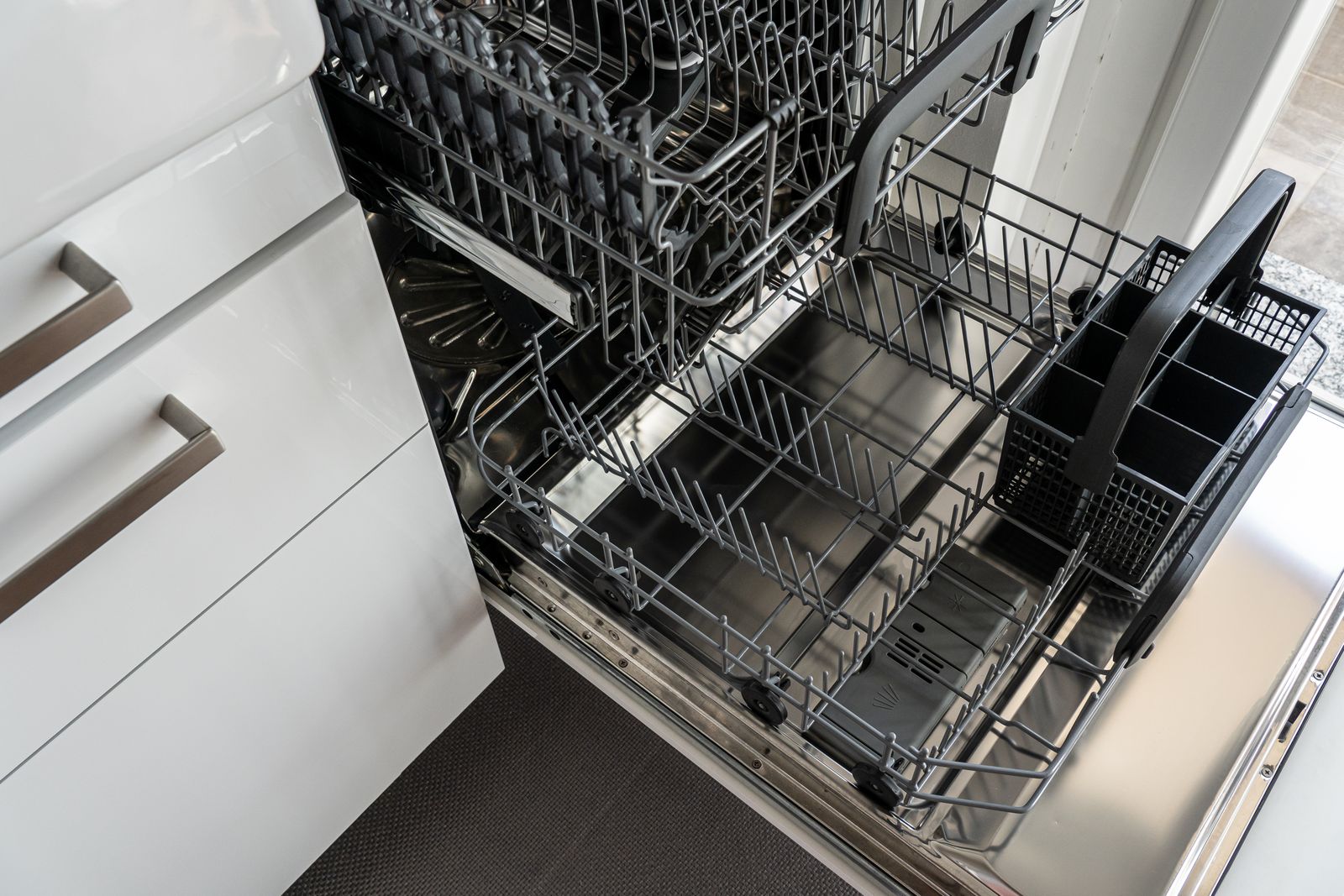
A miele dishwasher not cleaning properly leaves food residue or a white film on glasses, and on Miele machines the cause is usually water-related: the built-in water softener, the spray arms, or the filter.
Miele G-series dishwashers move water through a filter, circulation pump, and spray arms, and they report problems as F-codes such as F11 and F70, so confirming the water path and the Waterproof System float before suspecting electronics resolves most calls. We start with the everyday causes you can check yourself, then explain the signs that point to a part that genuinely needs a hands-on repair.
What a miele dishwasher not cleaning usually means
Miele dishwashers have an integrated water softener fed by reactivation salt. When the salt runs out, hard-water minerals leave a chalky film. Clogged spray-arm jets, a dirty filter, overloading, and the wrong detergent dose are the other common causes — long before the circulation pump.
First checks you can do
Start with the checks you can safely do yourself. Each one rules out a common, inexpensive cause, and together they resolve the majority of cases without a service visit:
- Refill the water-softener salt and confirm the hardness setting matches your supply; an empty reservoir causes white film.
- Remove the spray arms and clear each jet with a toothpick; seeds and labels block them.
- Clean the triple filter so circulating water stays clear.
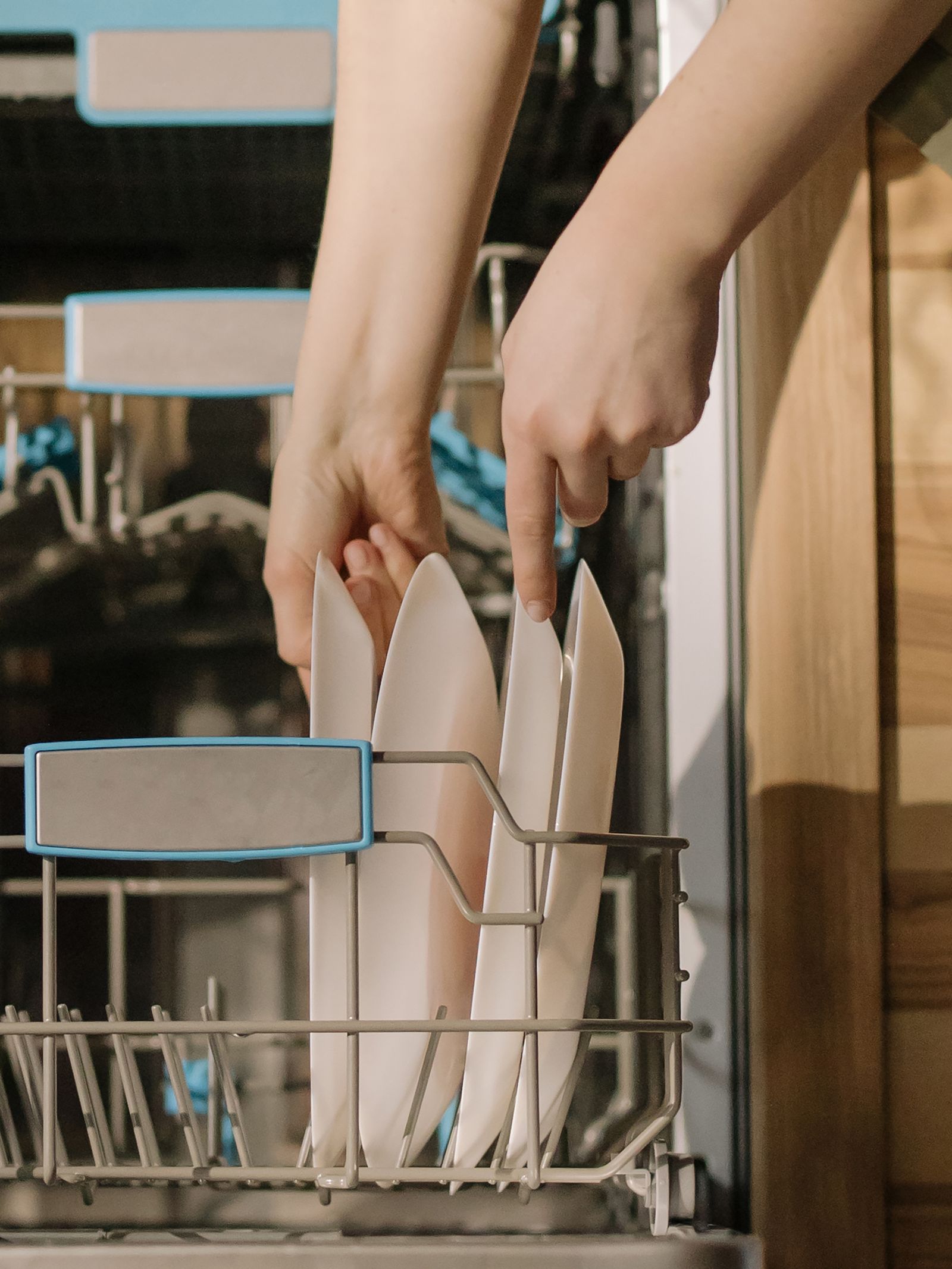
- Avoid overloading and nesting items that shadow each other from the spray.
Take these in order and test whether the problem has cleared before moving to the next. If you do end up needing help, having worked through them gives the technician a useful head start.
Reading the Miele display for a miele dishwasher not cleaning
Note any code before you act, because it narrows the diagnosis more than any other clue. A good first move for most Miele problems is a power reset: switch the appliance off at the wall or trip the breaker for a minute, then restore power. If the code returns straight away, treat it as a real problem pointing at the named part.
- F87 — water softener problem.
- F53/F67 — circulation-pump speed sensor / wrong speed.
- F69 — circulation pump blocked.
Note the exact characters and any plain-English message Miele shows alongside the F-number, since the wording often tells you which subsystem the control suspects.
When it is a problem, not a habit
If the everyday checks above do not resolve it, the problem has likely moved from something you can adjust to a component that needs testing or replacing. These are the signs that point that way:
- Salt, spray arms, and filter are clear but cleaning is still poor — the circulation pump (F53/F67/F69) or diverter may be responsible.
- A failed water-softener valve leaves film even with salt present.
- Low incoming water temperature on cold-fill installs can weaken cleaning.
At this point a proper diagnosis beats guesswork, since the remaining causes involve a specific part or electrical testing. An experienced technician can meter the suspect component and fit a genuine Miele part so the repair lasts.
Putting it together
Work the checks above in the order given. Most Miele dishwasher problems of this kind clear at one of the early, owner-checkable steps; the ones that do not point to a specific part and are worth a proper diagnosis rather than guesswork. Move from the simplest cause outward, confirm each step before the next, and treat a returning code or a lingering symptom as your cue to bring in help. A little routine care afterwards prevents most repeat calls, since Miele builds these dishwashers to a high standard.
Related reading: cleaning the Miele dishwasher filter, Miele dishwasher error code archive, and our dishwasher repair service.
Book Miele dishwasher service
If these steps do not resolve it, our experienced technicians repair Miele dishwashers with genuine parts and a 30-day labor guarantee. Schedule a visit, see what our dishwasher repair service covers, or confirm your model details on the manufacturer’s site at mieleusa.com.