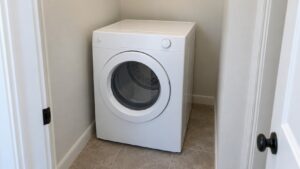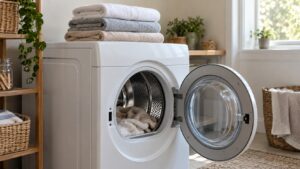
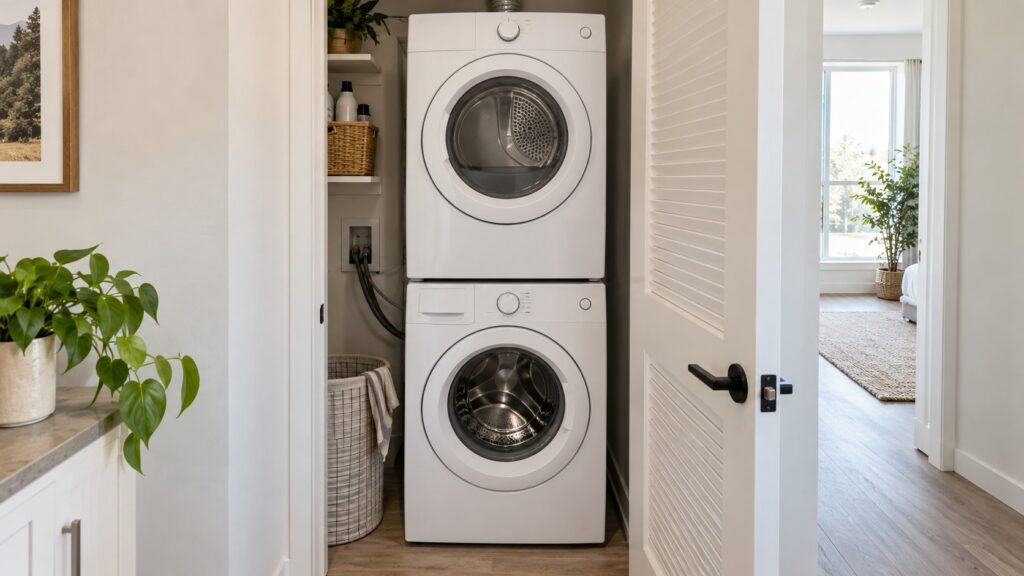
The Miele TWB120WP is the entry model in the T1 heat-pump dryer line, a compact 24-inch ventless dryer that runs on an ordinary 120V, 15A outlet with no exhaust duct and no 240V circuit. The rest of the T1 family, from the TWF160WP and TWI180WP to the TXD160WP, TXI680WP and TXR860WP, shares the same drying system, the Honeycomb drum and PerfectDry moisture sensing. What changes up the line is the control panel, the app connection, FragranceDos and SteamFinish, so the choice is about extras, not about drying power.
What is the difference between the Miele TWB120WP and the other T1 dryers?
On the specifications in our model list, every T1 dryer dries the same way: a heat pump called EcoDry recycles warm air in a closed loop, a patented Honeycomb drum lays the laundry gently against a waffle-like surface and PerfectDry conductivity sensing ends the cycle when the clothes reach the chosen dryness. The TWB120WP is the plain version with manual controls and no Wi-Fi. Move up the line and you add a connection to the Miele app, a more advanced control panel, a scent dispenser called FragranceDos and a steam option called SteamFinish for relaxing wrinkles.
That makes the TWB120WP a sensible choice for a household that just wants dry clothes, and the upper models a better fit for people who want the remote start, the notifications or the finishing options. Always confirm the exact feature set for your model number on the specification sheet, because Miele changes details between production years.
Why does a 120V ventless dryer matter?
Most full-size American dryers need a 240V circuit and a vent duct to the outside. All six T1 models on our list are listed as 120V and 15A, with no 240V supply or exhaust duct required. That opens up places where a dryer was impractical: an apartment with no vent route, a basement laundry nook, a closet or an interior room. You still need a grounded outlet within reach of the cord, space around the machine as the installation instructions specify and a way to handle the water the heat pump removes from the laundry. Our Miele dryer installation guide covers the requirements in more detail.
How does heat pump drying compare with a vented dryer?
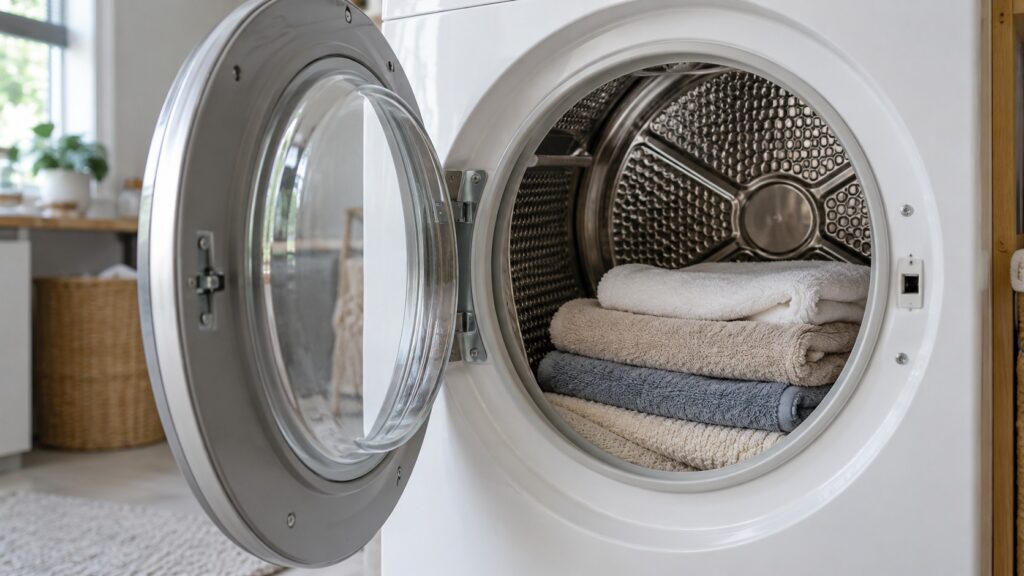
A vented dryer heats fresh air, blows it through the drum and throws it outside. A heat pump dryer reuses the same warm air: it passes through the drum, a heat exchanger cools it to remove the moisture and the air is warmed again and returned. The result is much lower energy use and gentler temperatures on fabrics, at the cost of longer cycle times. If you are used to a fast vented dryer, expect a heat pump cycle to take noticeably longer, and plan loads accordingly. Our explainer on how Miele heat pump drying works shows the loop step by step.
The trade is a good one for most households, because fabrics last longer and the utility bill falls. It is less attractive if you regularly need a very fast dry for a big load before work.
Which T1 features are worth paying for?
- App connection: useful if you want to start or monitor the dryer from your phone or get a notification when the load is done. Skip it if you never use smart-home features.
- FragranceDos: a single-dose scent for the laundry; nice if you like scented laundry, irrelevant if you do not.
- SteamFinish: a steam option for removing wrinkles and refreshing clothes, handy for shirts and school uniforms.
- M Touch controls: a more detailed touch panel on the high-tier models; DirectSensor controls on the mid-range are simpler and quick to learn.
If you buy the plain TWB120WP, the Honeycomb drum and PerfectDry sensing are the features that protect your clothes, and they are on every model, so you are not giving up the important parts by choosing the simplest dryer.
What should you pair the dryer with?
The T1 dryers are 24 inches wide and stackable, so they pair naturally with a Miele W1 washer of the same width, either side by side or stacked with the right kit. Check both model numbers against the stacking instructions before you buy, and never stack without the kit. Our Miele W1 washer buying guide compares the washers, and the Miele dryer tips show how to get the best results from the pair.
What does a heat pump dryer need to keep working well?
Clean the lint filter every load, empty or drain the condensate as the model requires, and clean the heat exchanger on the schedule in the manual, because lint on the exchanger is the most common reason cycles stretch. Our heat exchanger cleaning guide shows how. Give the dryer a room that stays at a normal indoor temperature, because a heat pump works best in a space that is neither freezing nor sweltering, and leave the front clear so air can reach the machine. Those two habits matter more than any feature on the panel. When a dryer is more than ten years old and several parts fail, see our Miele dryer repair or replace guide.