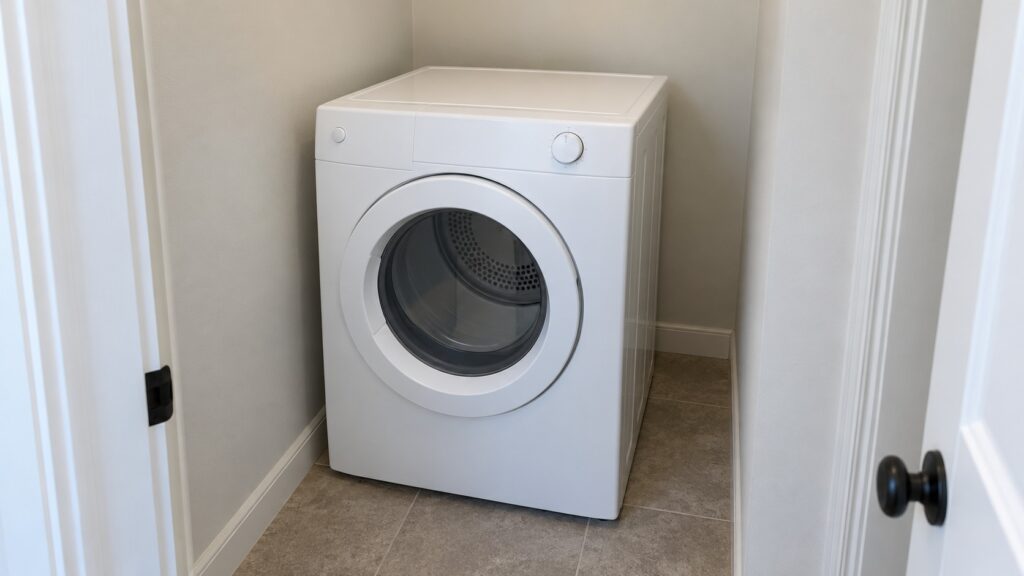
A Miele 120V ventless dryer, Miele’s compact heat-pump dryer, installs more simply than a conventional dryer: it plugs into a standard 120V, 15A outlet and needs neither a 240V circuit nor an exhaust duct. Our model pages, for example the TWB120WP, TWI180WP, TWF160WP and TXD160WP, list compact 24-inch front-load heat-pump dryers that are free-standing or stackable. The remaining decisions are where to put it, how to level it, how the condensate water leaves the machine and how much air space it needs. This guide walks through each step and the checks to make on the first cycle.
What does a Miele 120V ventless dryer need to run?
The specification block of the dryer pages we checked reads the same on power: 120V and 15A, with no 240V or exhaust duct required. That is a normal household outlet, which is why this dryer suits apartments, closets and laundry spots that never had a dryer circuit or a vent path. Our Miele dryer installation guide repeats the point: you plug it in, level it, choose how to handle the water and leave room for air.
Have the outlet checked by a qualified electrician if you are unsure that it is grounded, in good condition and not shared with other large loads. A dryer that trips the outlet may be on a circuit that is already overloaded, and that is a job for an electrician, not for resetting breakers over and over. Do not use an extension cord or a plug adapter, and read the installation sheet for your exact model.
Where can you put a ventless heat-pump dryer?
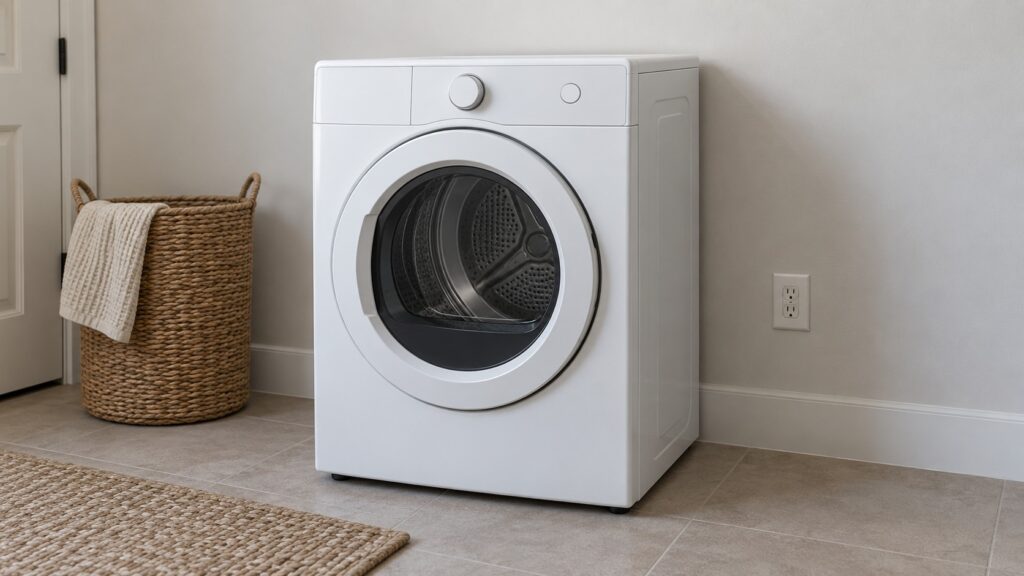
Almost anywhere with a level floor, an outlet and a little breathing space. Because a heat-pump dryer recirculates its air and condenses the moisture, it does not push humid air outdoors, and our heat-pump pages note that the usual dryer-vent headache disappears. It still needs air around it to draw and reject heat, so do not seal it into an airless cupboard. Our guide says an F66 code on first use usually means the dryer is boxed into a space with no airflow, which our F66 airflow guide explains.
Leave the clearances the installation sheet asks for at the sides, back and top, and keep the front clear so the door can open fully and you can reach the filters. If you plan to stack it on a washer, the model pages describe these dryers as stackable, and the stacking kit and method are in the manual for your washer and dryer, so follow those exactly. Never stack without the manufacturer’s kit.
How do you deal with the condensate water?
A heat-pump dryer takes water out of the clothes and has to put it somewhere. Our installation guide gives two options: empty the condensate container after each load, or fit the optional drain hose and run it to a standpipe or a laundry drain. The container is the simplest for a first setup. The drain hose is worth it when the dryer sits out of reach or you dry large loads.
If you plumb a drain, keep the hose free of kinks and fix it so it cannot slip out, because our guide notes that water pooling under a plumbed installation points to a loose or kinked condensate hose. If a full container stops the cycle, our dryer empty container guide explains what the dryer is telling you.
Before delivery day, measure the doorway and the path to the laundry spot, because a compact 24-inch dryer is easy to move but still heavy. Check the floor is solid and level enough, and clear the space where the dryer will stand. If you plan a drain, locate the standpipe or laundry sink and plan the hose route so it does not run across a walkway. Keep the packing materials until the dryer has run properly once, in case something has to go back.
How do you level the dryer and check the first cycle?
Place a level on top and adjust the feet until the dryer is steady side to side and front to back, since a rocking dryer vibrates, is noisy and can leave the condensate path draining badly. Check the door opens and closes cleanly, make sure the cord is not trapped, and then run a short first cycle with a small load. Watch for leaks at any connection, listen for rattles and confirm that no code appears on the display.
Wait to load the dryer fully until you have seen a cycle through. If the clothes come out damp, check the lint filters and the heat exchanger, which our heat exchanger cleaning guide covers, and read dryer not drying. For how the system works, see how Miele heat pump drying works.
When should you stop and call a professional?
Call an electrician if the outlet is damaged, ungrounded or overloaded, and a technician if the dryer shakes after leveling, leaks from anywhere other than a loose hose or throws a code that returns. If you smell burning or see water near the outlet, switch off the breaker from a dry spot, and do not touch the plug with wet hands. Do not open the cabinet to reach the heat pump or sealed parts. We are an independent repair company, not the manufacturer. Our Miele dryer repair page explains how a visit works, and you can schedule a visit online.