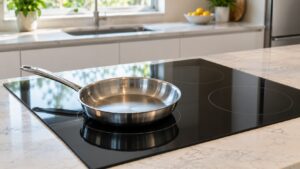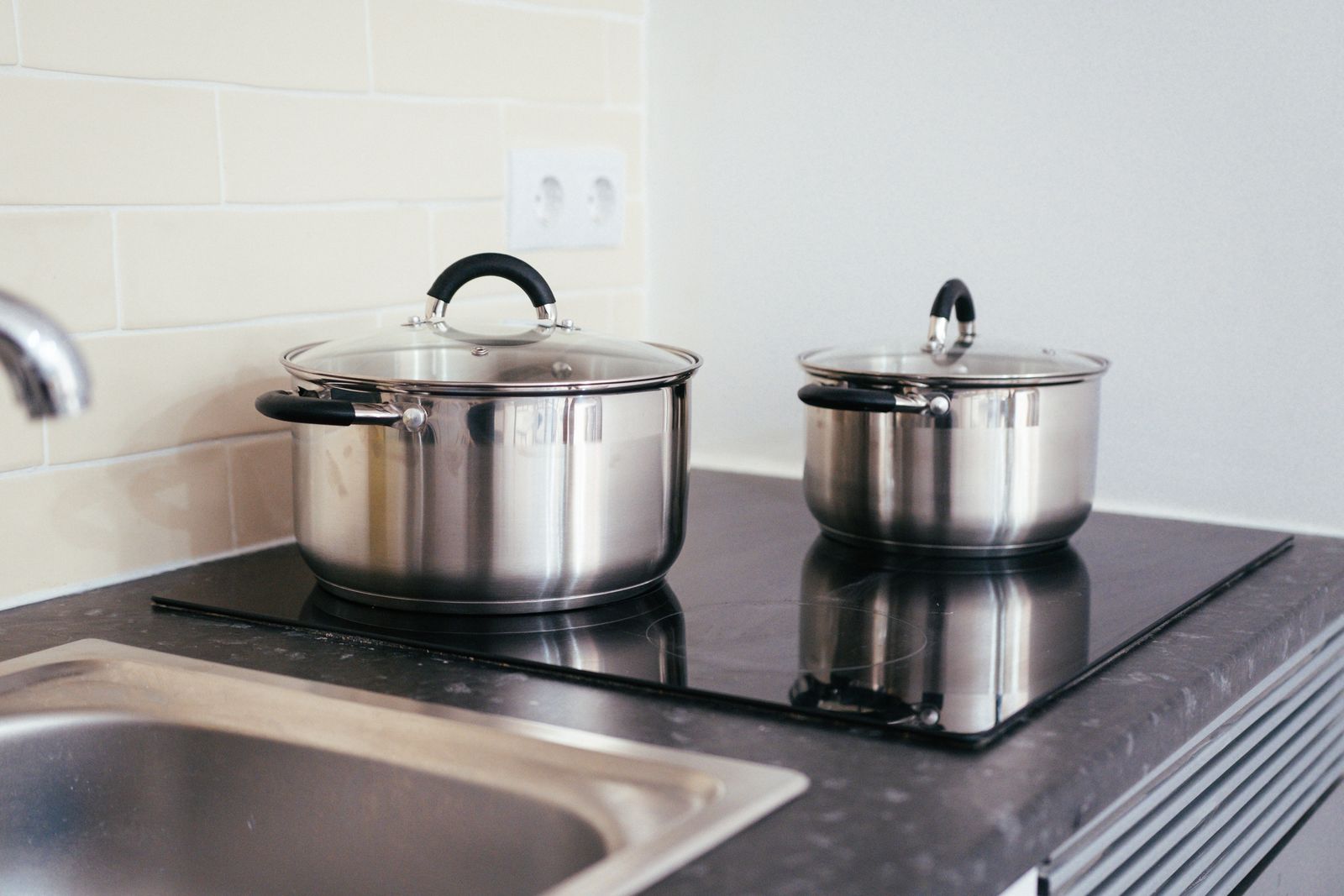
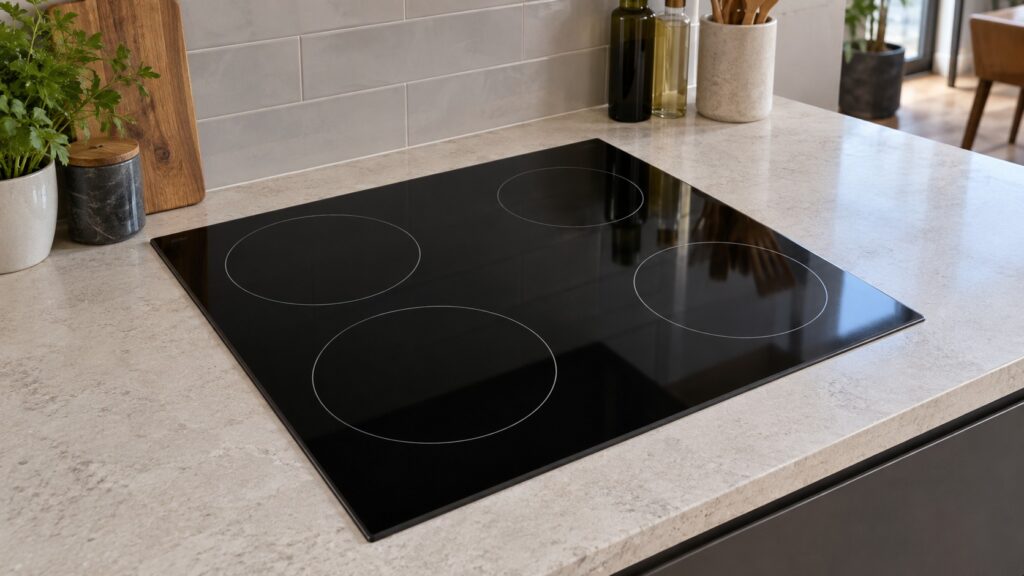
Miele induction cooktop cleaning is simple if you do it in the right order: let the glass cool, wipe loose soil with a soft damp cloth, clean with a cleaner made for glass-ceramic and remove sugar or melted plastic at once, while it is still warm, with a razor scraper held flat. Never use steel wool, scouring powder or abrasive pads, and never spray cleaner straight onto the touch controls. The KM 7700 line is built with a wipe-clean glass surface, so most days a damp cloth is all it takes.
What is the safest way to clean a Miele induction cooktop every day?
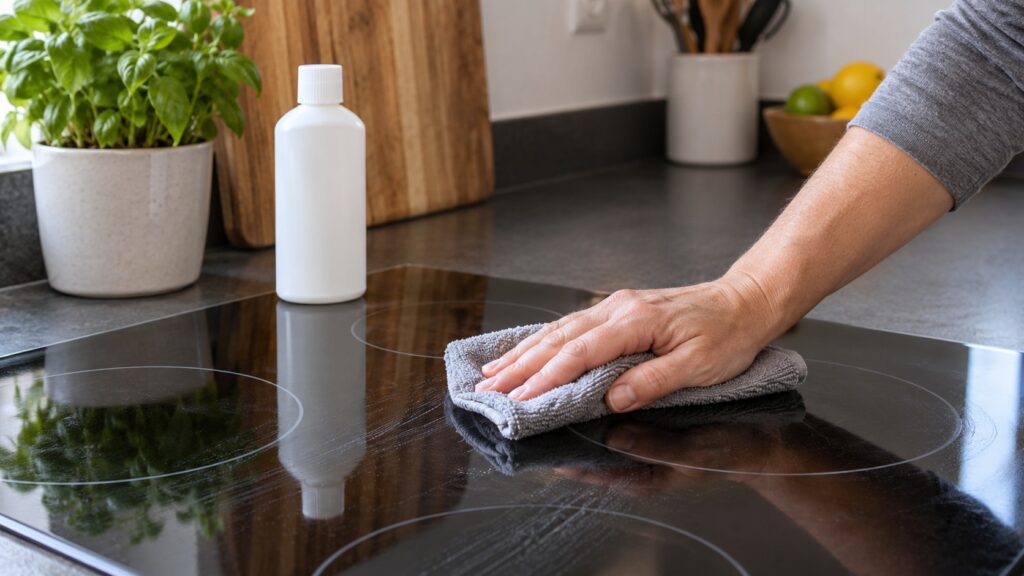
An induction cooktop stays much cooler than gas or radiant, because the heat is made in the pan and not in the glass, so splashes tend not to burn on. That is why daily cleaning is so quick. Wait for the residual-heat indicator to go out, which tells you the surface has cooled, then wipe with a soft, damp microfiber cloth, rinse the cloth and wipe again, and dry with a clean cloth to avoid water spots. If you wipe while the glass is still hot, steam and a wet cloth can burn you, and a sugary spill can smear into a sticky film. Our guide to the residual heat H indicator explains what the symbol means.
Switch on the control lock before you start, if your model has one, so a wet cloth cannot press the touch controls and switch a zone on. Cleaning with the controls unlocked is the most common way a cooktop starts beeping or heating at the wrong time.
How do you remove stubborn marks and stains?
- Let it cool for burned-on food or dried splatter, then put a damp cloth over the spot for a few minutes to soften it.
- Apply a few drops of glass-ceramic cleaner and rub with a soft, non-scratching pad or cloth in small circles.
- Use a scraper held at a shallow angle for anything that is raised, working gently so the blade glides over the glass and does not dig.
- Wipe off the residue with a damp cloth and dry the glass.
Metal marks, which look like gray or shiny streaks, come from aluminum or copper pans and from sliding rough pan bases across the glass. They are usually removable with the same cleaner and patience. White rings from boiled-over water with minerals can be treated with a cloth soaked in diluted white vinegar, rinsed off thoroughly afterward.
What should you remove immediately?
Two kinds of soil can damage glass if you let them cool on it. Sugar and syrups can crystallize and, when they re-melt and cool again, pit the surface; and melted plastic, foil or a sticky wrapper can bond to the glass. For both, do not wait. Switch the zone off, move the pan, and with oven mitts on and the glass still warm, scrape the spill away with a razor scraper held nearly flat, then wipe with a cloth and clean as above. Be careful: the glass will still be hot enough to burn skin, so use the scraper and a cloth, not your fingers.
What should you never use on induction glass?
- Steel wool, scouring powder and abrasive sponges, which leave fine scratches that trap soil.
- Oven cleaner and strong chemical sprays, which can stain the glass and damage the printed markings.
- Spray cleaner aimed at the touch controls, because liquid can seep under the glass or into the controls; spray onto the cloth instead.
- Bleach and ammonia-based products, which can leave a film or damage the trim on framed models.
- A hot, wet cloth on a warm surface, which makes streaks and can cause a burn.
How do framed and flush models differ for cleaning?
The KM 7720 FR, KM 7730 FR and KM 7740 FR have framed glass, with a metal frame around the surface; the KM 7735 FL and KM 7745 FL are flush glass, with the glass sitting level with the counter. On a framed model, wipe the frame edge and the gap between the glass and the frame so crumbs do not build up. On a flush model, keep liquid from pooling at the join with the counter, and wipe along the seam with a barely damp cloth. Our Miele cooktop installation guide explains how each type sits in the counter.
How can you prevent scratches and damage?
Lift pans instead of sliding them, make sure pan bases are clean and dry before they go on the glass and do not use the cooktop as a cutting board or a shelf. Do not leave a hot pot lid on the glass either, since trapped steam can leave marks. Use flat-bottomed, induction-compatible cookware; our explainer on how Miele PowerFlex induction works covers what the cooktop expects from a pan, and the Miele cooktop tips have further everyday habits.
When is a cooktop problem not a cleaning problem?
If a zone will not heat, a pan is not detected or an F code appears after cleaning, liquid may have reached the electronics. Switch the cooktop off at the breaker, do not use it and read our guides to the pan not detected symptom and the F flashing code. If the problem remains, our Miele cooktop repair page explains what a visit covers.