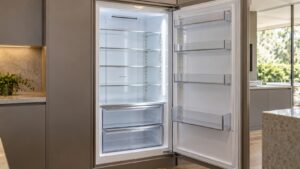
Miele refrigerator temperature settings are changed on the display or controls as your owner’s manual describes: change the setting in small steps, give the refrigerator time to settle and check the real temperature with a thermometer instead of trusting the number alone. Owners often search for how to adjust the Miele fridge temperature or how to set it, and the exact buttons and the available range are model-specific, so we send you to the manual for those. This guide gives the practical temperature settings tips that apply however the controls look: the safe targets for food, how to test, what affects the temperature and what an alarm or a display problem means.
What temperature should a Miele refrigerator be set to?
For food safety, the FDA advises keeping the refrigerator at or below 40°F and the freezer at 0°F. Those are targets for the actual air temperature around your food. The number you choose on the control is a setting, and how it relates to the real temperature depends on the model. The Miele refrigerator columns on our site, such as the KF 2902 Vi, are listed with a MasterSensor TFT control, DynaCool even-temperature circulation and NoFrost, so the control gives you a display, but our pages do not list the range of settings or the factory default. Check the manual for your model, and then verify with a thermometer.
A refrigerator that is set colder than necessary wastes energy and can freeze lettuce and drinks, while one set too warm shortens the life of food and risks safety. Aim for the safe target, and adjust only if the thermometer tells you to.
How do you change the temperature?
On a Miele refrigerator the temperature is set through the control and display on the unit. The sequence differs between models, so we do not list buttons. Find the section in the owner’s manual on setting the temperature, follow it exactly and note the value before you change it so that you can return to it. If the display is locked or the unit is in a showroom mode, the settings may not respond, and our guide on how to exit demo mode on a Miele refrigerator explains that case. Do not press buttons at random.
Change one setting at a time and by one step, then wait. A refrigerator needs time to reach a new temperature, especially a large built-in column, and judging it too soon leads to overcorrecting. Our pages do not give a fixed waiting time, and the manual may. Avoid loading a lot of warm food or opening the door often while you wait.
How do you check the real temperature?
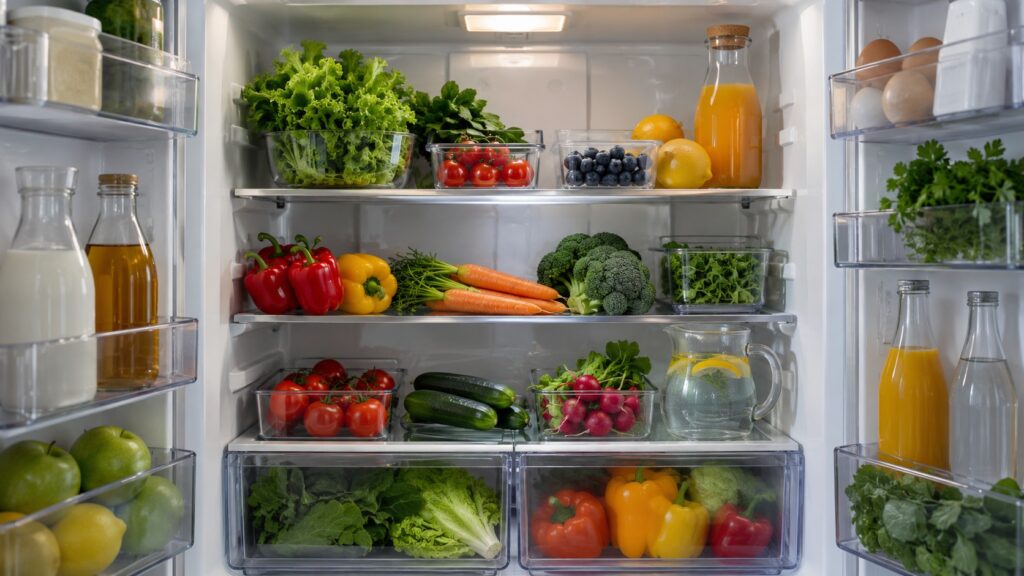
Place an appliance thermometer on a middle shelf, in a glass of water if you want to read a more stable temperature, and leave it long enough to settle without opening the door more than needed. Read it quickly when you open the door. Check the freezer the same way with a thermometer made for freezers. If the thermometer reads above 40°F in the refrigerator or above 0°F in the freezer, adjust by one step and test again. If it reads colder than needed and your food is freezing, adjust the other way.
Different zones of the refrigerator have different temperatures. The door is warmer than the back of a shelf, and humidity-controlled drawers are set for their own purposes. Our guide on how MasterCool and MasterFresh work explains the zones in a Miele refrigerator.
What else affects the temperature?
Several habits matter more than the setting. A door that does not close fully, a worn gasket, a crowded refrigerator that blocks airflow, hot food placed inside, a refrigerator placed next to an oven or in direct sunshine, and frequent door opening all push the temperature up. Keep the vents clear and do not pack food against the back wall.
Our Miele refrigerator tips go through the habits that keep the temperature steady, and the explainer on how NoFrost works shows why airflow matters in a frost-free refrigerator.
What if you get a temperature alarm or the setting will not hold?
A temperature alarm means the inside has become warmer than the set range for too long, for example after a long door opening or a power cut. Our guide on the Miele refrigerator temperature alarm explains what to check. If the refrigerator is not cooling at all, read our guide on a Miele refrigerator not cooling. Meanwhile keep the doors closed. According to FDA guidance, a closed refrigerator keeps food safe for about four hours without power, and a full freezer holds for about 48 hours, or about 24 hours if it is half full.
If the display flashes a temperature, shows a code or will not accept changes after you have checked for a lock or demo mode, note exactly what it shows. Do not open panels or the back cover to look for a sensor.
When should you call a technician?
Call if the temperature keeps drifting after you have adjusted it and checked the door, if food spoils or freezes without explanation, if the display or controls are dead, or if an alarm returns. If you see water, smell burning or find a wet outlet, switch off the breaker at the panel while standing on a dry floor, and never pull a plug from a wet outlet. We are an independent repair company, not Miele. See our Miele refrigerator repair page, or schedule a visit online.