
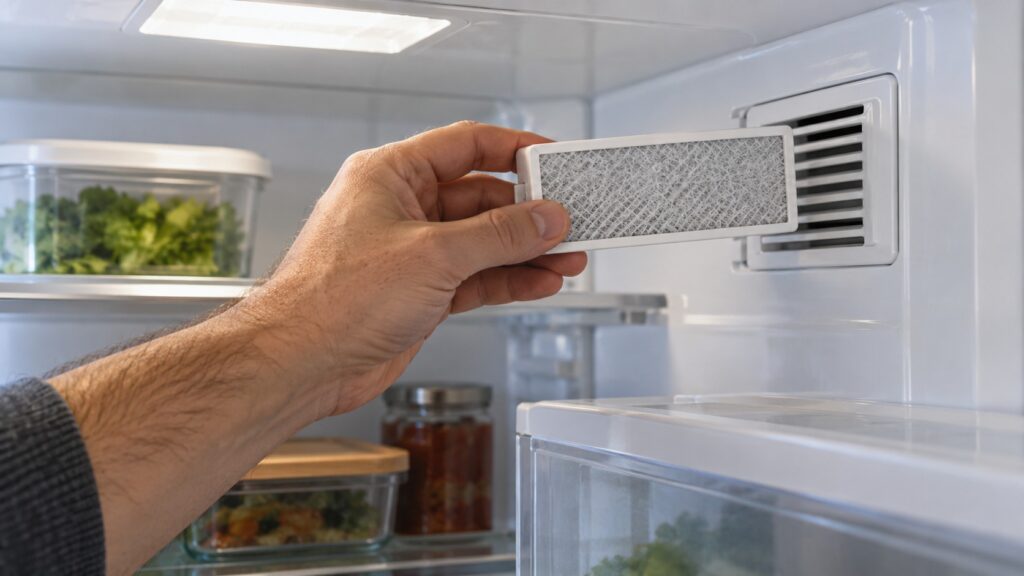
A Miele refrigerator filter change involves two different filters, and our guides treat them separately: the Active AirClean charcoal filter, which absorbs odors inside the cabinet and is replaced when the appliance prompts you, and the water filter, which our maintenance guide says to change about every six months. We do not publish a step-by-step replacement procedure here, because the exact way to release and seat each filter depends on the model, and our pages do not list it. Your owner’s manual shows the steps for your refrigerator, and this guide explains what to know before and after.
Which filters does a Miele refrigerator have?
Two, on the MasterCool built-in columns. Our Active AirClean glossary describes the charcoal odor filter used in MasterCool refrigeration and in Miele wine coolers: activated charcoal that absorbs the odors food gives off, so smells do not transfer between items or linger. The charcoal saturates over time, so it is a consumable. Our model pages list Active AirClean filtration on the MasterCool columns, such as the KFN 7795 D.
The second is the water filter for the water supplied to the ice maker. Our MasterCool maintenance guide says an old water filter starves the ice maker and dispenser, and that clean water and ice depend on changing it roughly every six months. Models with an integrated IceMaker have a water supply, while the all-refrigerator columns list ice as not applicable.
How do you know when it is time?
The charcoal filter tells you. Our guides say to replace it on the schedule the appliance prompts, so watch for the prompt on the display and treat it as the signal. A cabinet that has started to smell is the other sign, and the glossary says a fresh filter is the fix for that. If you have a filter light or prompt you do not recognize, check the owner’s manual for what it means on your model.
The water filter is time-based. Our guide says about every six months, and an overdue filter shows up as weak ice production, small or hollow cubes or low water flow. Our ice maker troubleshooting guide lists an overdue water filter among the common causes of no ice.
What should you prepare before you change a filter?
Find the model number on the rating plate and keep the owner’s manual open. Use the filter listed for your model; a filter that fits another model is not a safe guess. Have a towel and a small tray ready for drips, and clear the shelf or area near the filter so you can see what you are doing.
If the filter is a water filter, be ready to close the water supply valve if anything leaks. Do not force a filter that will not release; check the manual, because forcing it can crack a housing. If you cannot release it easily, stop and book a visit rather than levering at it.
Write the date on a note or in your calendar when you change a filter. A simple record makes the next change easy to time, especially for the water filter, which our guide ties to a calendar interval and not to a prompt. If you ever need to describe a problem to a technician, the date of the last change is one of the first things they will ask about.
What should you check after the change?
Look for leaks first: wipe the area dry and check again after a few minutes. Then check what the manual says about resetting the prompt or flushing the water line, because steps differ by model. Our maintenance guide notes that poor ice or water flow after a filter change can indicate an airlock to purge. If the flow is weak after a change, that is the first thing to ask about, along with whether the filter is seated fully.
An odor that lingers after a fresh charcoal filter can have another cause. Our maintenance guide says it can mean a spill in a vent or drain, so check the compartment for spilled food and wipe the shelves. A refrigerator that is overpacked against the air outlets also cools unevenly, which our refrigerator tips guide explains.
What if you cannot find the filter or the steps?
Ask for the right information instead of improvising. The owner’s manual for your model shows where each filter is and how it comes out. If you do not have it, the model number from the rating plate is what you need to look it up. If you think the filter housing has cracked or leaks, close the water supply valve and book a visit. Do not take apart the compartment or panels around it.
Keep the rest of the routine in view too. Our maintenance guide also lists vacuuming the condenser as part of a three-part routine that keeps a column cooling efficiently, and says to do it per your model’s access, so follow the manual for that as well.
When should a technician look at it?
Call if a filter will not release or seat, if there is a leak, if ice and water flow stay poor after a change, if an odor persists after you have cleaned the compartment or if a prompt will not clear. We are an independent repair company, not the manufacturer. Miele refrigerator repair starts with a diagnostic visit, and we confirm the estimate before any work begins.