A Miele washer electronic module, meaning the control board and display electronics that run the washer, is often worth repairing when the rest of the washer is sound and not much older, because our washer repair or replace guide leans toward repair for a single fault on a healthy Miele and toward replacement for a major board on a much older unit. Replacement becomes the better choice when a major board fails on a much older washer or when several problems appear together. This guide explains what the module does, which codes point to it, how to separate it from cheaper faults, and how to weigh repair against a new washer without guessing at prices.
What is the electronic module in a Miele washer?
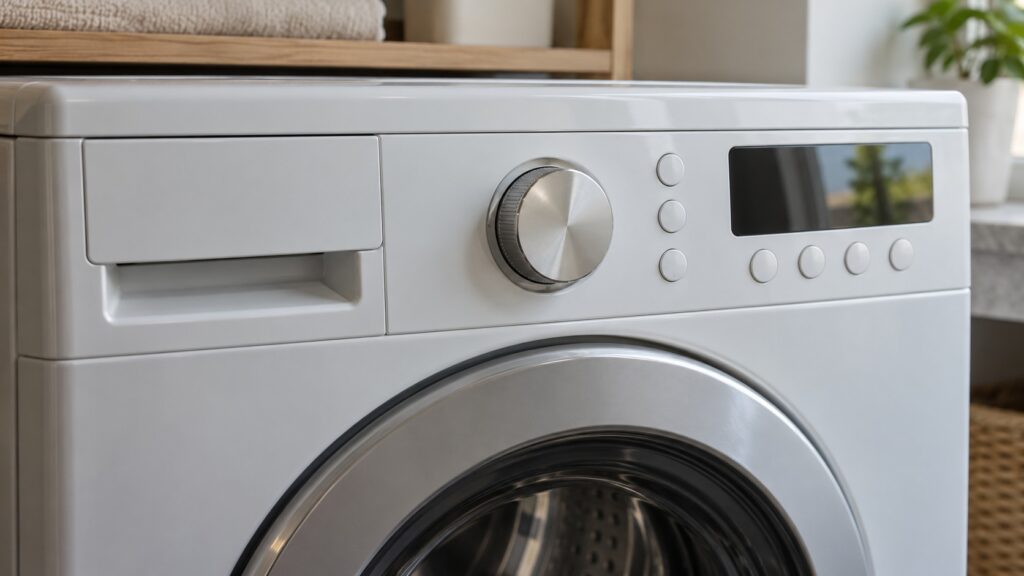
The module is the set of circuit boards that read the program selector, run the display, switch the water valves and heater, and drive the motor. In a Miele W1 these are the main control board, the display electronics and the wiring that links them. When one fails, the washer can refuse to start, stop mid-cycle, ignore the selector or show a service code. Our pages treat these as technician-level faults, because diagnosing a board needs test equipment and the right replacement part, and the boards sit behind panels with mains power and water nearby.
Not every electronic-looking problem is a bad board. A door that will not lock, a drain that is blocked or a heater that does not warm can all look like control trouble. That is why a diagnosis comes before the repair or replace decision.
Which Miele washer codes point to the electronics?
Our code pages describe several. The F39 page calls it an electronics problem, with the main control board, display electronics and wiring harness as the affected components, and says it is a technician-level repair. The F100 page describes an internal communication problem, where two control boards such as the main board and the display have lost their link. The F104 page describes low drive voltage, a supply or motor-drive issue, and the F62 program selector guide covers a washer that cannot read the dial.
A code is a clue, not a final verdict. The same code can come from a loose connector, a damaged harness or a failed board, and only testing tells them apart. Compare codes with the symptom: a washer that ignores the selector fits F62, and a washer that loses the display fits a communication fault.
What can you check before assuming the board is bad?
Rule out the power first. Make sure the outlet works and the breaker has not tripped, and consider whether a storm or power event happened just before the fault began. A short power reset, switching the breaker off for several minutes and back on, is a reasonable first step; if you do it, stand on a dry floor and do not touch the plug with wet hands. If the code goes away and stays away, that was an electronic glitch. If it returns, stop repeating the reset and call for service.
Also check the simple things around the washer: that the door is shut, the drawer is closed and nothing is wedged in the selector. Do not open the control panel or reach behind it. Our Miele washer tips cover everyday use. If the code is a water or door one, such as the ones in F11 or F35, those are not electronic module cases.
When does repairing the electronics make sense?
Repair is the better choice when the washer is otherwise in good shape. Our washer repair or replace guide lists the leaning-toward-repair cases: a single common part on a washer only a few years old, and a washer that otherwise washes, spins and balances well. A single electronic fault with a clean drum, a sound door seal and no leaks fits that picture, as long as the washer is not much older; a major board on a much older machine is where the guide leans toward replacement. The same guide says the W1 is built for long service.
Ask the technician what exactly will be replaced: the main board, the display board or only a harness or connector. A repair that addresses a loose connection costs very differently from a new board. A quote should name the part, the labor and any warranty. We do not give prices on this page, because they vary with the part and the model, and a written quote is the only number you should rely on.
When does replacing the washer make sense?
Our repair or replace guide says the decision shifts toward replacement when a major component such as drum bearings fails on a much older unit, or when multiple problems appear together. Apply that to electronics: a failed main board on an older washer that also has a worn bearing, a leaking seal or repeat repairs points to general wear. In that case, a new washer may be the better use of your money. Also consider whether the washer is still doing what your household needs; if you are outgrowing it, a failure is a good time to move on.
If you choose a new one, our W1 buying guide explains the tiers, and the washer repair cost guide gives context for what repairs involve. A washer that is under warranty should be handled with the seller or manufacturer first.
When should you call a technician?
Call when a code from the list above returns after one reset, when the display or selector behaves erratically, when the washer stops mid-cycle with no water or door cause, or when you smell burning. If you smell burning, see smoke or find water near the electronics, switch the breaker off at the panel while standing on a dry floor and do not run the washer. We are an independent repair company, not the manufacturer. Our Miele washer repair page explains how a visit works, and you can schedule a visit online.