A Miele washing machine smell almost always comes from moisture and residue trapped in the washer, not from a fault in the machine: the door seal fold, the detergent dispenser, the lint filter and the drum itself are where it starts. Clean those four, run a hot maintenance wash, use the right amount of detergent and leave the door ajar between loads. If the smell is burning, or like rotten eggs from the drain, the cause is different and needs a different response.
Why does my Miele washing machine smell?
A washer is warm, dark and wet, which is the ideal environment for bacteria and mildew. Modern machines use less water and lower temperatures than older ones, so residue from detergent, softener and skin oils is not fully flushed out. That residue settles in the places where water pools and air does not reach, and microbes feed on it. The smell you notice, usually musty or sour, is the product of that growth.
Low-temperature washing makes it worse. Cold and cool cycles are good for fabrics and energy, but they do not kill the microbes that build up. Using too much detergent also adds to the residue, and closing the door tightly after each load locks in the dampness. Understanding that the cause is moisture and residue tells you the fix: remove the residue, heat the machine and let it dry.
Where does the smell hide?
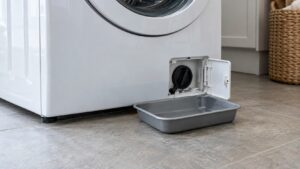
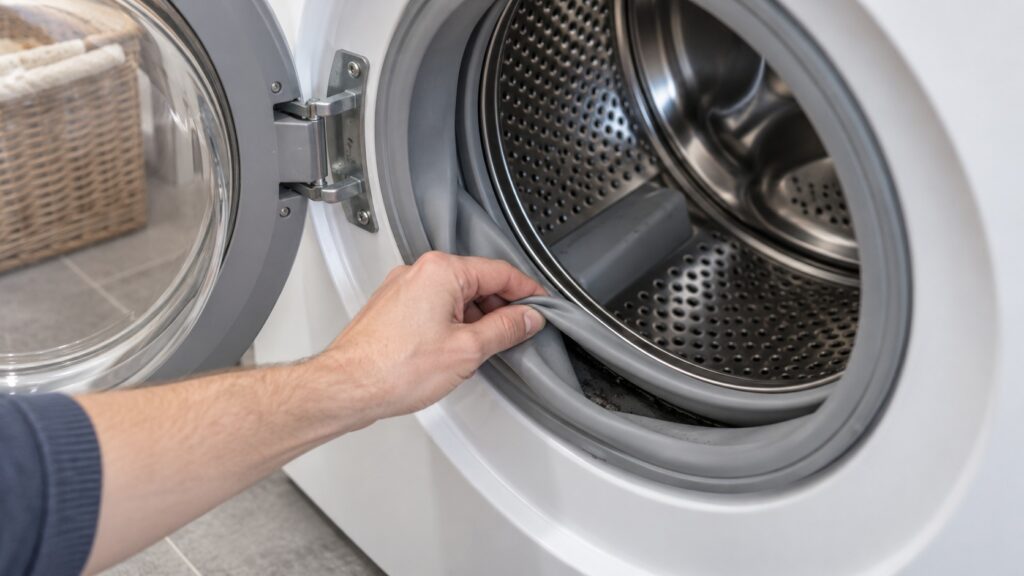
The first place is the rubber seal around the door. The lower fold of the seal holds a little water after every load, along with lint and hair. Pull the seal gently open and look; black or green spots are mildew. The second is the detergent dispenser, where residue builds up in the drawer and the recess behind it. The third is the lint filter in front of the drain pump, which holds water and debris by design. Our Miele washer lint filter and drain pump guide shows how to empty it.
The fourth place is the drum and the area behind it, where a film can form and the smell comes out when the machine is warm. Clothes washed in a smelly machine pick up the odor, which is often what makes owners notice it first. If towels or sheets smell sour even after washing, check these four spots before you change your detergent.
How do you remove the smell step by step?
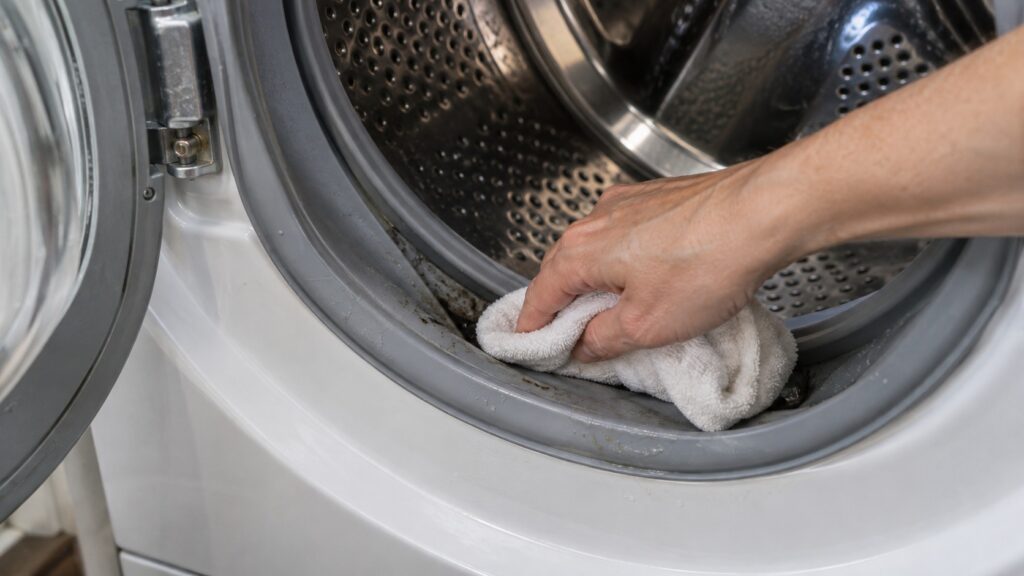
Work through these steps in order. First, wipe the door seal with a cloth dampened with warm water and a little mild detergent, folding the seal open to reach the lower fold, and dry it. Second, take out the detergent drawer, soak and brush it, and wipe the recess. Third, clean the lint filter, following the steps in our guide. Fourth, run the hottest cleaning program your washer offers, empty, with a washing machine cleaner or the descaling product recommended in your manual.
After the hot wash, wipe the seal again, leave the door and the dispenser drawer open for several hours, and check whether the smell has gone. If a trace remains, repeat the hot wash once more. A thorough clean usually clears the smell completely. Our Miele washer descaling guide explains how limescale, which also traps residue, is removed.
How do you stop it from coming back?
Four habits do most of the work. Use the right amount of detergent: more is not cleaner, and the extra stays in the machine. Run a hot program, such as a cotton wash at a high temperature, every month or so, using whites or towels so the machine gets a proper heat. Leave the door ajar and the dispenser drawer slightly open between loads, so the machine dries. Take wet laundry out promptly, since a damp load left in the drum is itself a source of smell.
If your machine has automatic dosing, check that the cartridges are not leaking or overdosing, as explained in our guide to how Miele TwinDos works. Our Miele washer tips offer more habits that keep the drum fresh.
Water quality plays a part as well. Hard water leaves limescale on the heater and in the drum, and the rough surface holds on to residue, so a washer in a hard-water area tends to smell sooner. Treating the water, or descaling on schedule, reduces the film. If you use liquid softener, use only the recommended amount, because it is sticky and feeds the same growth as detergent does. Washing sports clothes and cloth diapers, which carry a lot of body oil, in an occasional hot load also stops those oils from building up in the machine.
When is the smell a fault and not dirt?
A burning or hot plastic smell is a warning. Stop the washer, unplug it and do not use it until it has been checked, because it can mean an overheating motor, a failing heater or an electrical problem. A rotten egg or sewage smell that comes from the drain rather than the drum points to a dry or blocked drain trap or a standpipe problem, not the washer itself. A smell together with standing water in the drum can mean a blocked pump, so see our guide to a Miele washer that won’t drain.
If the washer is clean, the smell remains and the washer shows other symptoms, a technician can inspect the pump, the heater and the drain path. See Miele washer repair for what a visit involves.