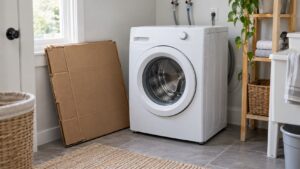
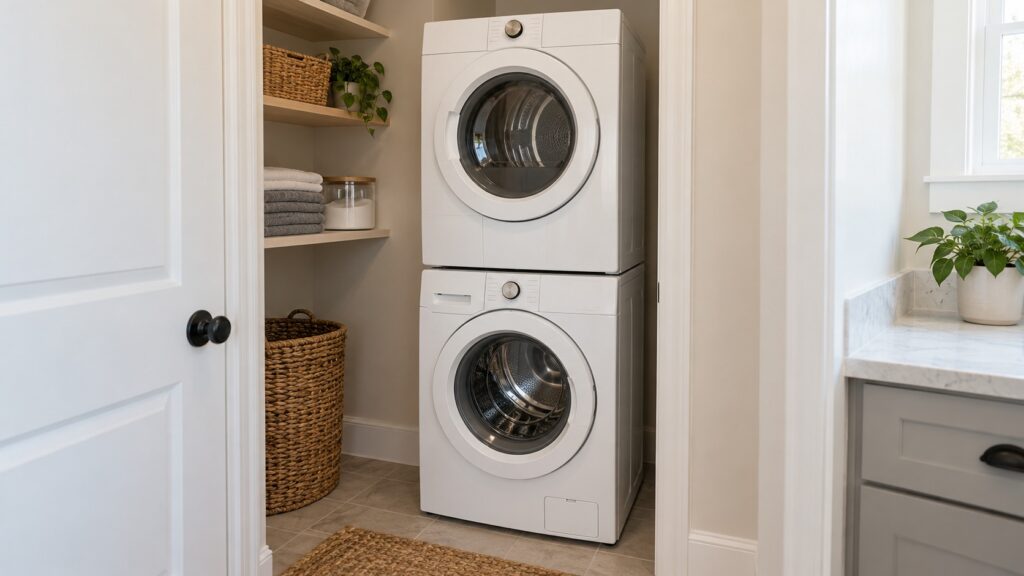
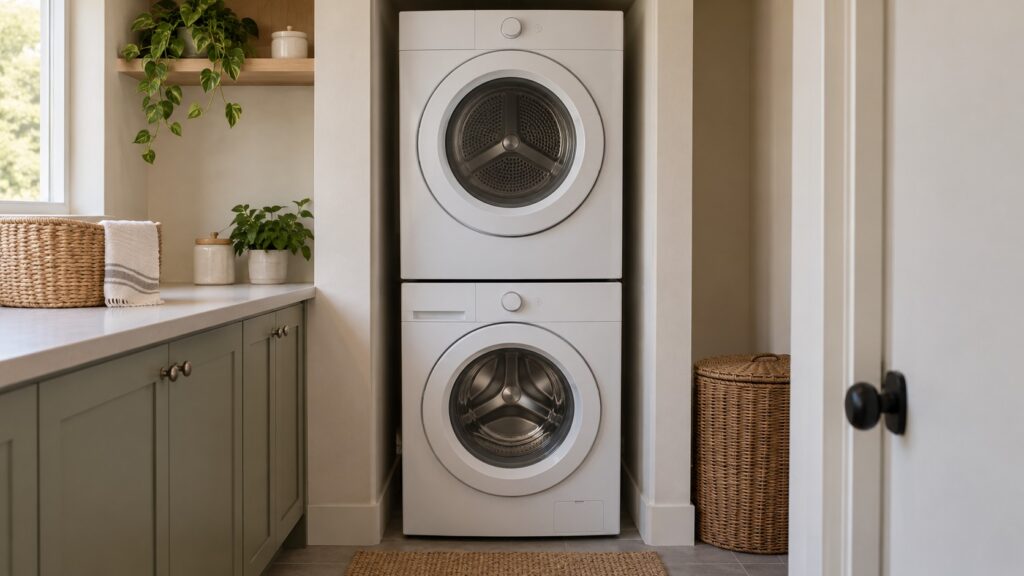
Miele washer dryer stacking means placing a compact 24-inch dryer on top of a compact 24-inch washer so the pair takes up one footprint, which is why it is popular in closets, alcoves and apartments. On our site the W1 washers and the T1 heat pump dryers are both listed as 24-inch, free-standing or stackable machines, and the T1 dryers run on 120V without a vent. This guide explains what to confirm before you stack, what the installation involves, why a stacking kit and the installation sheets matter and which parts of the job belong to a professional.
Can a Miele dryer be stacked on a Miele washer?
Our model pages list the W1 washers, such as the WWB020 WCS and the WWD160 WCS, as front-load compact 24-inch machines for free-standing or stackable installation. The T1 dryers, such as the TWB120 WP and the TXR860 WP, are listed the same way: compact 24-inch, ventless heat pump dryers that can stand alone or be stacked. So the family is designed for a column of two machines.
That is a statement about the family, not about every pair. We cannot say which stacking kit or part number fits which washer and dryer, or whether a kit is included, because our pages do not list it and kits change over time. Ask the seller or read the installation instructions of both machines, which say whether a connecting kit is required, which one and in what order the machines go in. Do not stack without the kit the instructions call for, because a dryer sitting loose on a vibrating washer can slip.
What makes stacking easier with these machines?
The T1 dryer is ventless. According to our model pages it needs only a 120V, 15A outlet, with no 240V circuit and no exhaust duct, so there is no vent run to fit into a closet or to route through a wall. The W1 washer needs water supply and a drain, so the pair needs those and an outlet for each machine. Our T1 ventless dryer installation guide explains the 120V dryer requirements, and the Miele washer installation guide covers the water, the drain and the leveling of the washer.
Each machine still has its own needs: space for the door to open, room for the hoses and cords behind, and air around the heat pump dryer as its instructions describe. Check the clearances on both sheets and plan for the larger of each.
What should you check before you stack?
Start with the floor. A stacked pair is heavy and puts a concentrated load on the floor, so the floor must be solid and level, and the washer must be leveled before the dryer goes on top. Read the sheets for the weight and height of each machine and for the combined height, and compare the combined height with the opening or the shelf above. Check that the door of the dryer can open fully in the space you have, and think about how you will reach the controls and the filter at that height.
Check the water hoses and the drain for the washer, the outlet for each machine, and the condensate arrangement for the heat pump dryer as its manual describes. Keep the laundry space dry and free of clutter. If your washer has any transport fittings, deal with them only as its installation instructions describe, before the washer is used. Read our washer vibrating guide for what it looks like when something is wrong.
How is the stack put together?
The general order is to install and level the washer first, make its water and drain connections and test that it runs without vibration. Then attach the connecting parts of the kit as the instructions describe, lift the dryer into position with a second person and secure it as directed. Finally, connect the dryer to its outlet, test both machines and check that the dryer does not move when the washer spins. We do not describe the fixing steps because they differ between kits and models, and the sheet is the authority.
Lifting a dryer onto a washer is an awkward job and a common cause of injury and damage. Use two people, protect the top of the washer and never lift by the door. If you are unsure, hire an installer. A gas or 240V connection is not involved with these 120V ventless machines, but any new outlet should be installed by a qualified electrician.
After the stack is in place, run a short test load in the washer and watch the pair for movement while it spins. Check the hoses and the drain for drips, confirm that the dryer starts and that its condensate arrangement works as the manual describes, and make sure that the cords are not pinched between the machines and the wall. Keep the installation sheets and the manuals together, because a technician will ask for the model and series numbers from the labels on both machines.
What if the stack shakes or moves?
If the pair vibrates, stop and check the leveling of the washer, the feet and the load. A washer spinning an unbalanced load can shake a stack more than a single machine would. Do not run the washer with the dryer unsecured. If water appears around the washer, switch the washer off at the breaker panel while standing on a dry floor, and do not pull a plug from a wet outlet.
When a machine stops, shows a code or leaks, call for service. We are an independent repair company, not Miele. See our Miele washer repair page, or schedule a visit online. For a dryer question, our Miele dryer installation guide may help.