
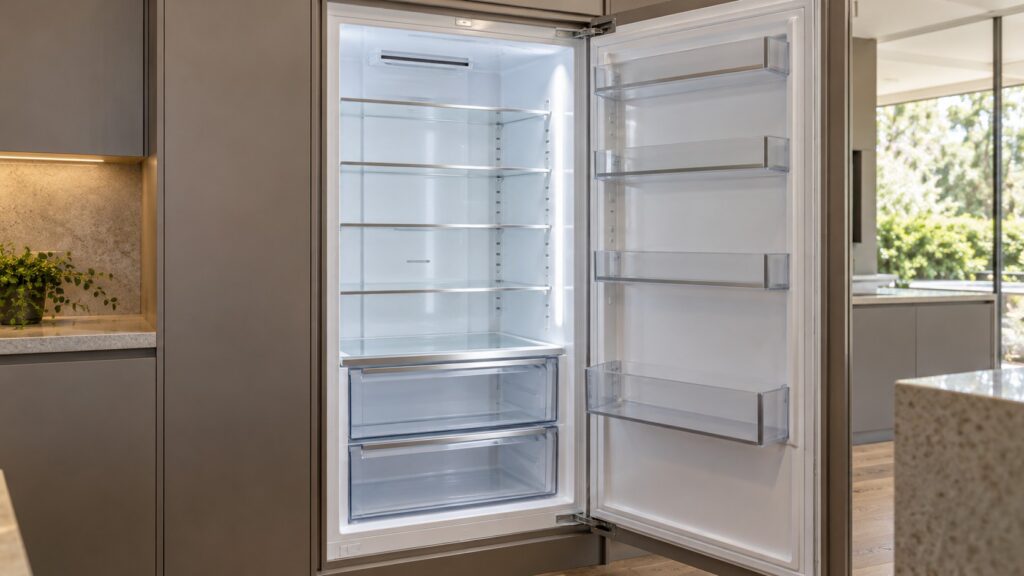
To clean the Miele refrigerator drawers, empty the drawer, remove it in the way your owner’s manual describes, wash it by hand with warm water and mild soap, rinse and dry it fully and slide it back until it seats. The part that varies is the removal itself: the release method differs between Miele refrigerator and freezer models, and our pages do not show one method for all of them, so the manual for your model decides. This guide explains how to prepare, how to clean drawers and the interior safely, what not to do and when a stuck or broken drawer needs a technician.
How do you remove a drawer from a Miele refrigerator?
Owners often ask how to remove a drawer from a Miele fridge, and the honest answer is to follow the manual for the exact model. Miele refrigerator columns such as the KF 2902 Vi on our site are built-in, panel-ready units with humidity-controlled storage. How a drawer comes out, whether it lifts, tilts or releases a catch, depends on the model. We do not describe a sequence, because guessing can break a runner or a clip. Look for the section on removing and refitting drawers in your owner’s manual.
In general, first empty the drawer so that nothing falls out. Pull it out to its stop gently. Look at the runners and the sides for a catch or a lever, and read the manual before you apply any force. If a drawer does not come out as the manual describes, stop. Never pry with a tool and never take off panels or covers to free it; the parts behind the drawers include the fan and the wiring, which are for a technician.
How should you clean the drawers?
Wash the removed drawer in a sink with warm water and a little mild dish soap, using a soft sponge or cloth. Rinse thoroughly and dry with a clean cloth, because moisture left behind can cause odors or mold. Avoid abrasive pads, bleach and strong solvents, which can scratch or cloud the plastic, and do not use very hot water, which can warp it. Do not put drawers in the dishwasher unless your manual states that the part is dishwasher-safe. We do not give a water temperature, because the material limits are in the manual.
Glass shelves and drawer fronts can crack with a sudden temperature change, so let a cold glass part come to room temperature before washing it in warm water. Wipe the rubber seals and slides with a damp cloth and dry them. A little food debris in a runner or a groove is the usual reason for a sticking drawer.
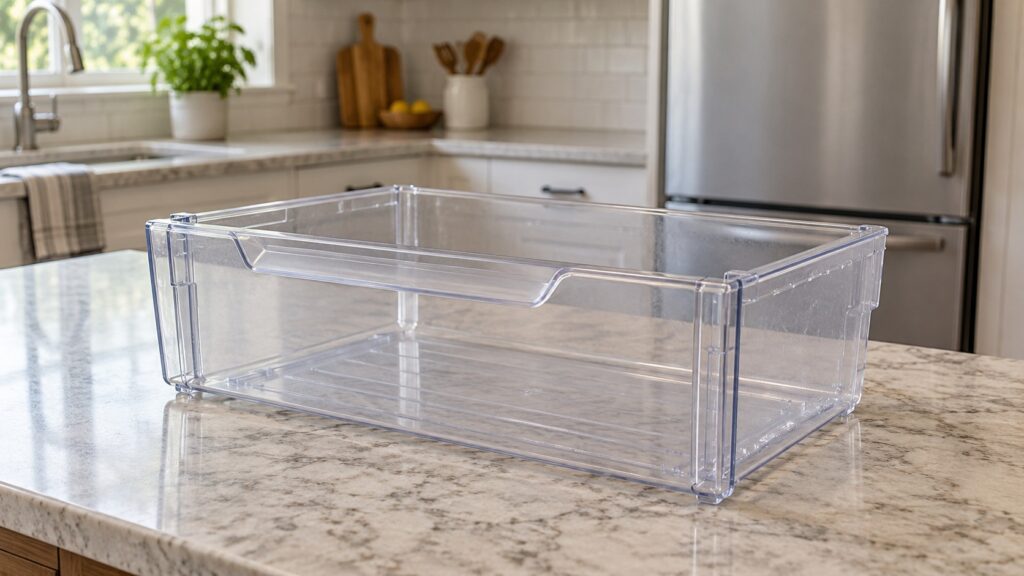
What about the inside of the refrigerator?
While the drawer is out, wipe the interior walls and the floor of the compartment with a cloth dampened with mild soapy water, then dry them. Do not spray liquid directly onto controls, lights or the back wall, and do not pour water into the compartment. Switching the refrigerator off for a short clean is not usually necessary; if you do, follow the manual and move perishables into a cooler. Food that has been out of the cold for a long time is not safe, so work quickly and keep the doors closed while you are not using them.
Your model’s humidity-controlled storage, listed on the KF 2902 Vi page as MasterFresh, works best with clean slides and seals. Our guide on how MasterCool and MasterFresh work explains the idea, and the MasterCool condenser filter cleaning guide covers a separate part of the upkeep that owners tend to forget. For the routine in general, see Miele refrigerator tips.
How do you refit the drawer?
When the drawer and the compartment are dry, put the drawer back as the manual describes, making sure that it engages on both runners and slides all the way in. Close the door and check that the drawer front sits evenly and that the door closes fully without catching. A drawer that is not seated can keep the door from sealing, which warms the refrigerator and can set off a door alarm. Put the food back, with raw meat on the bottom and ready-to-eat items above it.
If the drawer feels loose, grinds or does not slide smoothly after cleaning, do not force it. Check for debris on the runners. A broken runner or clip is a parts job. Our temperature alarm guide explains why a refrigerator may sound an alert if a drawer or a door is left unsealed.
How often should you clean the drawers?
Wipe up spills as they happen and clean the drawers whenever you see residue. A thorough drawer-out clean when you see residue is reasonable for most households, since your cooking and shopping habits matter more than the calendar. Clean more often if you store fresh produce, because leaves and juices leave residue and encourage odors. We do not publish a fixed interval from Miele for drawers, so adjust to what you see.
Replace a cracked drawer or a damaged seal rather than patching it. Do not use tape or glue on parts that touch food.
When should you call a technician?
Call if a drawer is stuck or broken, a runner is damaged, the door will not close after you have refitted the drawer, or the refrigerator is not cooling. If you see water leaking, frost forming or ice where it should not be, or if you smell burning, switch the breaker off at the panel while standing on a dry floor. We are an independent repair company, not Miele. See our Miele refrigerator repair page, or schedule a visit online.