Miele oven door seal maintenance is one of the simplest checks a homeowner can do, and one of the most overlooked: the rubber gasket that runs around the oven door opening is what actually keeps heat inside the cavity, and a seal that has hardened, cracked or lost its compression lets heat escape steadily — which stretches cook times, wastes energy, and can even confuse the oven’s own temperature sensor into reading conditions that do not match what is happening in the cavity.
How do I check a Miele oven door seal for wear?
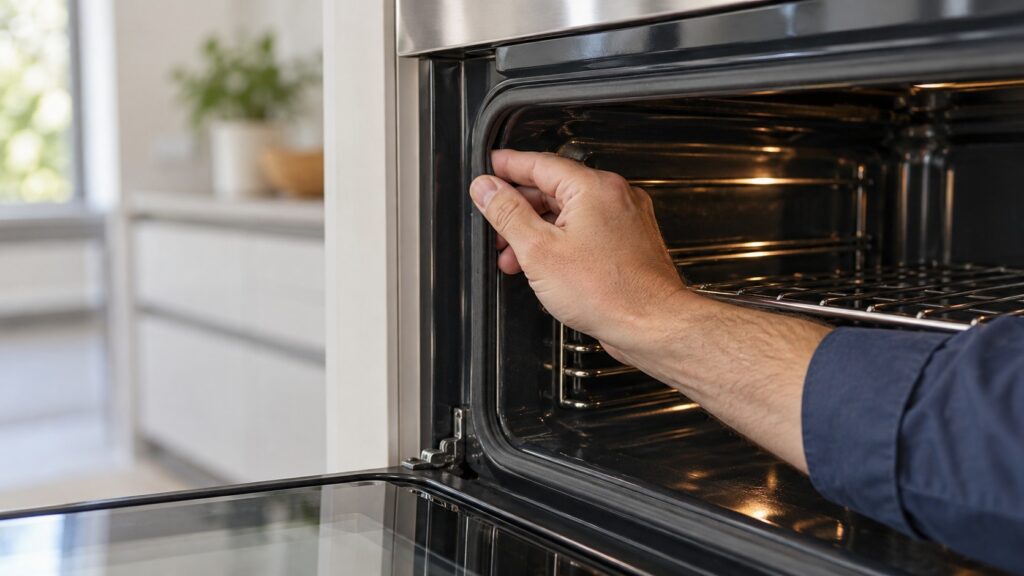
Run a finger along the entire perimeter of the gasket with the door open, feeling for spots that have gone stiff or brittle compared to the rest of the seal, and look closely for cracking, flattening, or a section that has pulled loose from its channel. A seal in good condition should have some give to it everywhere; a seal that feels hard in one section, or that has visibly compressed flat where the door presses against it most, has started to lose its ability to seal.
A simple confirming test: with the oven off and cool, close the door on a strip of paper positioned at a few points around the seal and try to pull the paper out. If it slides out easily at any point, the seal is not gripping there the way it should. Repeat the paper test at the top, both sides, and the bottom of the door rather than checking one spot and assuming the rest matches, since a seal can degrade unevenly and hold firm at three corners while failing at the fourth.
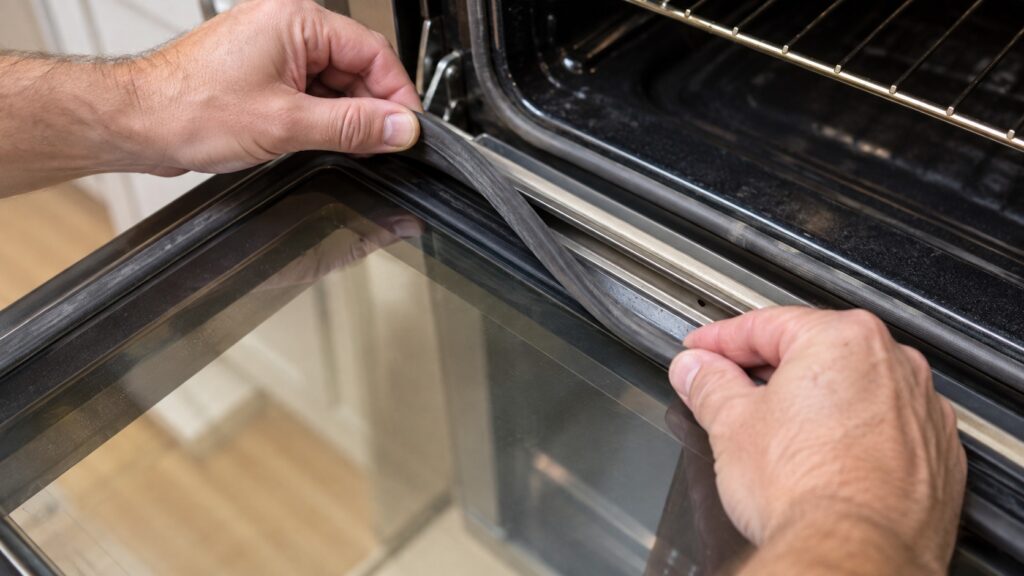
What happens if a worn oven door seal is left alone?
A seal that no longer seals lets heat leak out continuously during a bake, which means the cavity has to work harder and longer to hold its set temperature — cook times creep up, energy use rises, and a bake that should take forty minutes can quietly stretch toward fifty or sixty. Because the oven’s temperature sensor is reading conditions inside a cavity that is losing heat unevenly around the leak point, a persistently poor seal can also produce readings that look like a sensor problem even when the sensor itself is fine. We cover the sensor side of that relationship in our guide to Miele oven sensor fault codes — a technician diagnosing an odd temperature complaint will usually check the door seal before assuming the sensor has failed. The two symptoms genuinely look alike from the kitchen side — a dish coming out underdone despite the display showing the right temperature can be a leaking seal, a drifting sensor, or occasionally both at once, which is exactly why ruling out the cheaper, simpler part first is the sensible order of operations.
How do I clean the seal and the channel it sits in?
Wipe the gasket itself with a damp cloth and a mild cleaner, avoiding anything abrasive that could nick the rubber, and pay particular attention to the channel the seal sits in around the door frame — grease and food debris that build up there work into the seal over time and accelerate exactly the hardening and cracking you are trying to avoid. A seal kept clean and free of trapped grit lasts noticeably longer than one left to collect residue between cleanings. Avoid oven-cleaning sprays or anything caustic directly on the gasket material itself; those products are formulated for the enamel interior, not for rubber, and repeated exposure is one of the more common ways a seal is pushed toward premature hardening.
Can I replace just the door seal, or does the whole door need to change?
In most cases the seal alone can be replaced without touching the rest of the door — it is designed as a separate gasket that seats into a channel, not bonded permanently into the door assembly. If the door still closes flush, latches securely, and the hinges hold it square, a worn seal is usually a straightforward, inexpensive fix on its own.
How long does a Miele oven door seal usually last?
A door seal under normal use typically holds up for several years before it needs replacing, but the timeline varies a lot with how the oven is used. Frequent self-clean cycles run the seal through some of the highest temperatures it ever sees, and repeated exposure accelerates the hardening and cracking that eventually ends its useful life. A seal cleaned only with a damp cloth and kept away from oven-cleaning sprays generally outlasts one that gets wiped down with whatever cleaner is on hand, since those products are formulated for enamel, not rubber.
There is no fixed replacement schedule worth following blindly — the visual and paper checks described above are a better guide than a calendar date, since two ovens of the same age and model can wear their seals at very different rates depending on how often they are used and how they are cleaned.
When is a bad seal actually a sign of a bigger problem?
If the door will not sit flush against the frame no matter how new the seal is, or if one side of the door sits noticeably higher or more open than the other, the seal is not the real problem — a warped door panel or a hinge that has worn and sagged is holding the door slightly open at that point, and a new seal will compress against a gap it cannot close. Hinge wear in particular tends to show up first as an oven that seems to lose heat despite a seal that looks fine; if a fresh seal does not resolve the issue, the hinge is the next thing to have checked.
If you are not sure which you are dealing with, our guide to a Miele oven that is not heating properly covers the wider set of causes beyond the seal, and our technicians can tell a seal problem from a hinge or sensor problem in a single visit. Our Miele oven tips cover other everyday habits that extend the life of the door and its seal together. If the oven is older and several of these components are showing wear at once, our repair-or-replace guide can help weigh whether it is still worth maintaining.
Miele oven repair covers door seal, hinge and sensor diagnostics together, and we confirm the estimate before any work begins — we are an independent repair company, not a factory service arm. Schedule a visit if your oven’s cook times have been creeping up.