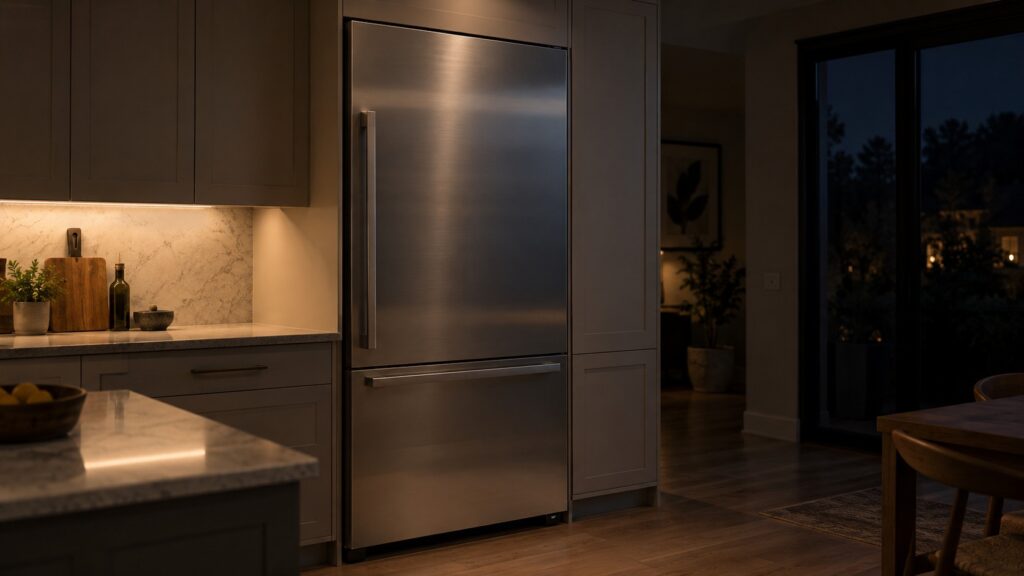
Miele refrigerator fan noise is normal when it is a steady whoosh while the compartment cools, and it is a fault when it turns into buzzing, rattling or grinding. Miele MasterCool columns on our site use a DynaCool fan to circulate air through the cabinet and, on units with NoFrost, a fan that blows air across the evaporator hidden behind the rear wall. Our DynaCool glossary says a fan that has started buzzing or rattling is a mechanical fault worth addressing, and lists ice buildup around the fan blade, a worn bearing or a motor nearing the end of its life as the usual causes.
Is Miele refrigerator fan noise normal?
Some of it is. Our NoFrost explainer says a NoFrost unit is mechanically busier than a manual-defrost freezer, so it makes more noise, and that a fan running whenever the compartment is cooling is normal. Ticking or light cracking as the evaporator heats and then cools is normal too, as is water trickling shortly after, which is the meltwater reaching the tray. A steady compressor hum and occasional defrost ticks are normal, not problems.
The noise to take seriously is different in character. A fan that buzzes or rattles, that squeals, that scrapes, or that has gone quiet while the compartment warms is a fault. If you are unsure, compare it with how the unit sounded when it was new, and note when the noise happens: only when the fan starts, only after a defrost or all the time.
What does the DynaCool fan do?
Our DynaCool glossary describes it as a fan-assisted system that actively circulates air through the cabinet so the temperature is more even from the top shelf to the bottom drawer. It says the fan typically sits at the back of the cabinet near the evaporator. Our model pages list DynaCool on the MasterCool columns, such as the KFN 7795 D, KF 2802 Vi, KF 2902 Vi and KF 2982 Vi.
The glossary also says a fan that has gone quiet, or one that has started buzzing or rattling, is a mechanical fault worth addressing rather than living with. Once circulation stops, the cabinet reverts to something closer to static cooling and the temperature spread across shelves widens, even though the compressor is still running and the refrigerator still feels cold enough.
What can you check safely from the front?
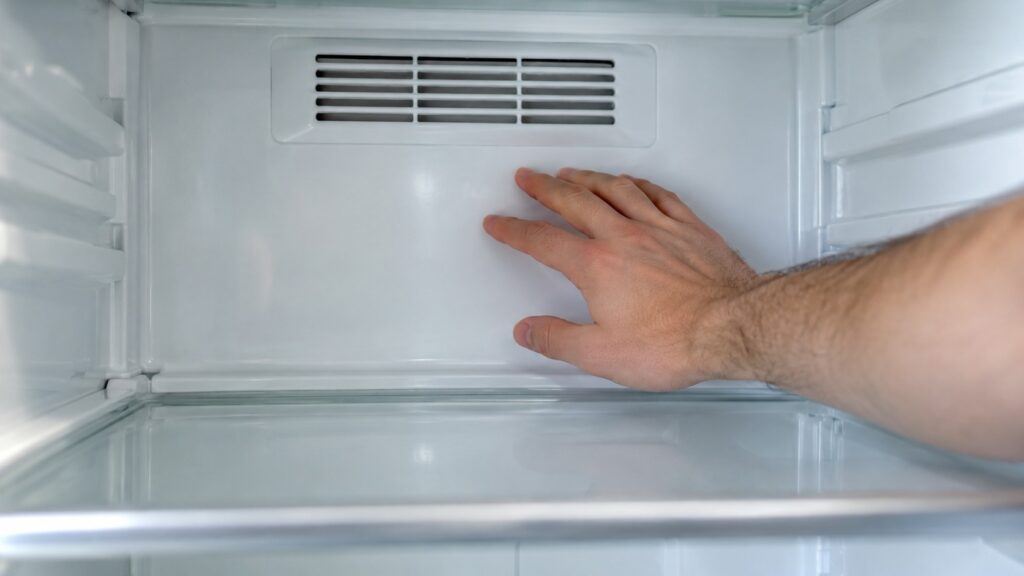
Look for things that vibrate or block the air. Take out any container that is touching the rear wall or the vents. Our DynaCool guide says tall containers, dense stacking against the back wall or items pressed against a vent opening can block the air path as effectively as if the fan were not running. A carton pushed flat against the vents can also make a refrigerator sound strained.
Check that bottles, jars and shelves are not rattling against each other. A loose shelf or a container resting against the liner can mimic a fan noise. Close the door gently and listen again with the door closed and with it open, if the light and the fan still run when the door is open.
Check the door seal and the surrounding fit. A door that is not sealing makes the unit run constantly. Our NoFrost explainer says a freezer that runs constantly, with no quiet periods at all, is saying something different from normal: either the door is not sealing, or the defrost system has stopped clearing the coil and the fan is pushing air across a block of ice.
What should you leave to a technician?
Everything behind the rear wall. The fan, the evaporator and the defrost parts are there, and a built-in column is tight in its cabinet. Do not pull out the rear panel, chip at ice or reach in to stop a fan. Do not run a hair dryer into the vents. If the noise is a buzz, a rattle or a grind that does not stop, or the temperature is rising, book a visit. Our pages list ice around the blade, a worn bearing and a fan motor near the end of its life as the usual causes, and each of those is a diagnosis, not a guess.
While you wait, keep food safe. Keep the doors closed as much as you can and check the temperature; if the unit is no longer cooling properly, move perishable food to another refrigerator or a cooler. Our refrigerator not cooling guide explains the checks for weak cooling, and our refrigerator tips describe the loading and airflow habits that keep DynaCool working.
Is it worth repairing?
A fan or a bearing is usually a straightforward part swap and a part swap is usually far cheaper than a new built-in column, but panel-ready columns carry their own cost if the unit has to come out. If the refrigerator is older and the fan is one of several things showing wear, read our refrigerator repair or replace guide. We are an independent repair company, not the manufacturer. Miele refrigerator repair starts with a diagnostic visit, and we confirm the estimate before any work begins.