The Miele wine cooler repair or replace question has an unusual answer compared with the rest of the kitchen, and it is worth knowing why before you price anything. A wine cabinet is a simple refrigeration machine wrapped in an expensive cabinet. The parts that fail are mostly cheap and accessible; the part that is expensive to lose is the cabinet itself, which is often built into a run of joinery that was measured around it.
Why built-in changes the arithmetic
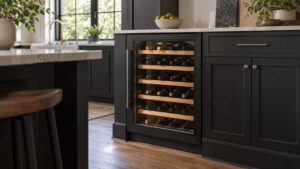
A freestanding wine cooler can be wheeled out and swapped in an afternoon, and the repair-or-replace sum is the ordinary one: cost of repair against cost of a new unit. A built-in cabinet is a different calculation. It was installed into an opening sized for it, with a plinth grille, a power supply and often a panel front matched to the rest of the kitchen. A replacement that is even slightly different in width or height turns an appliance purchase into a cabinetry job.
That is why we will often recommend repairing a built-in unit at a price point where we would recommend replacing a freestanding one. The appliance is only part of what is at stake. Before deciding anything, measure the opening and find out whether the current model is still made in that size.
The failures that are not worth worrying about
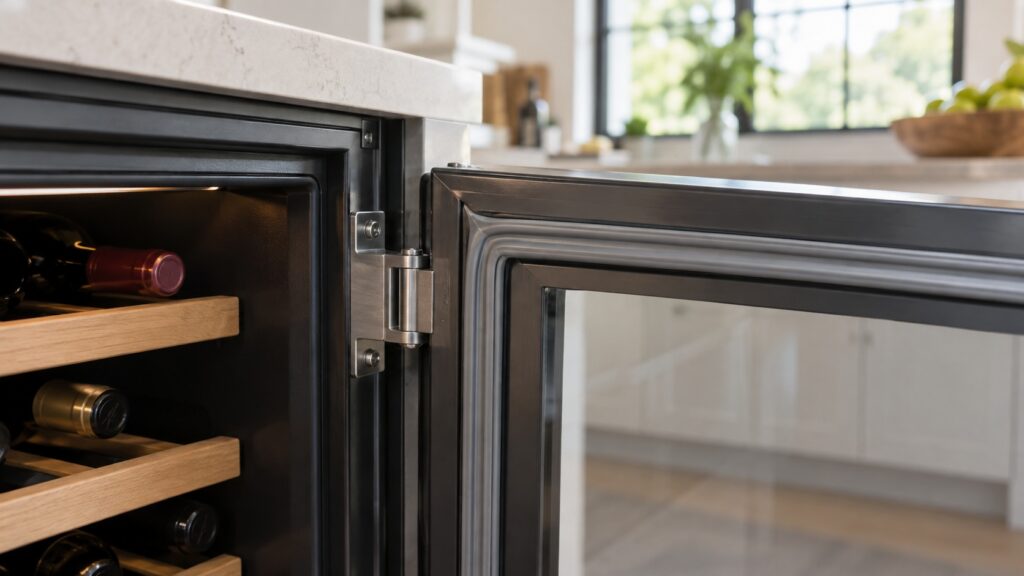
Most wine cabinet call-outs are not the compressor. The common list is short, cheap and thoroughly repairable: a door seal that has hardened and now leaks humidity, a hinge that has sagged so the door no longer self-closes, an interior LED strip, a fan that has become noisy, a shelf rail that has come off its track, a temperature sensor that has drifted. None of those touch the sealed refrigeration system, and none of them are a reason to replace a cabinet.
A control board is the most expensive item on that list and is still usually worth doing, because everything else in the cabinet is untouched by its failure. What matters is whether the board is still available for the model — and on Miele that availability tends to be good, which is part of what people are buying.
Where the line actually sits
The line is the sealed system: the compressor, the refrigerant circuit and the evaporator. A leak in that circuit means recovering refrigerant, finding and repairing the leak, evacuating and recharging — real work by a qualified technician, and a job where the cost is meaningful against the price of a cabinet.
- Under about ten years and built in: repair is usually the better value, even for the sealed system.
- Over about fifteen years and freestanding: a sealed-system repair is rarely the better value.
- Any age, and the liner is corroded or the glass is delaminated: replace. Those are the cabinet failing, not a part.
- It has been flooded: replace. Water in the insulation never leaves, and the cabinet will smell and corrode from the inside.
Age is a weaker signal than people expect
The instinct with any appliance is to price its remaining life by its age, and with a wine cabinet that instinct misleads. These units run a small compressor at a modest duty cycle in a stable indoor environment, with no water inlet, no drain pump, no heating element and no door slammed twenty times a day. There is simply less to wear out than in a dishwasher or a washing machine of the same age.
What ages a wine cabinet is siting, not calendar years. A cabinet built into a run beside an oven, or one whose grille has never been cleaned, has worked far harder than its age suggests. A cabinet in a cool utility room with clear ventilation may be mechanically young at fifteen. When we assess one, the questions are where it sits, how hard the compressor has been running, and whether the cabinet itself is sound — not what year it was bought.
What a diagnosis actually establishes
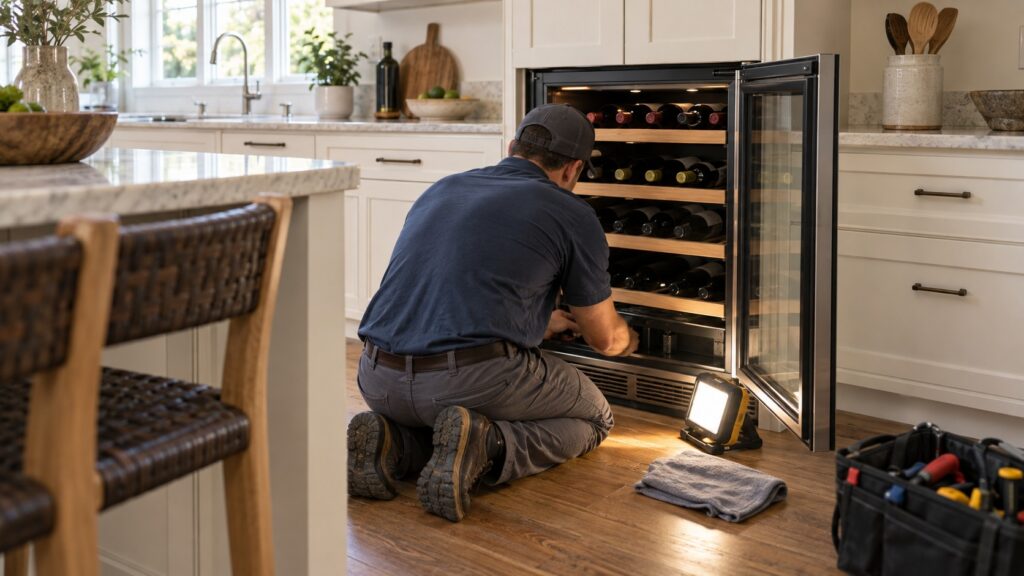
There are only a few things a visit needs to determine, and they map directly onto the table above. Is the sealed system holding, or is this a leak? Is the compressor starting and running, or failing to start? Is the fault electronic — a board, a sensor, a fan — and is the part available for this model? And is the cabinet itself sound: liner, glass, insulation and frame.
Those four answers decide the recommendation between them, and none of them can be reached from a photograph or a description over the phone. A cabinet that will not cool can be a dead compressor or a fifteen-dollar seal, and the symptoms from the kitchen side are indistinguishable.
Rule out the things that are not faults first
A surprising share of the cabinets we are asked to price for replacement are not broken. A blocked ventilation grille makes a healthy compressor run constantly and miss its set point on a warm day. A door seal with a fold in it does the same. A cabinet that is not level runs noisy and can stop self-closing. All three look exactly like a dying appliance from the outside.
Work through the maintenance list before pricing anything, and read a Miele wine cooler that is not cooling and a compressor that runs constantly. If the cabinet recovers after a grille clean, you have your answer and it cost nothing.
Getting an honest number
We are an independent repair company, not a factory service arm and not a dealer, so we have nothing to sell you on the replacement side. That is the whole reason to ask us rather than a showroom. A diagnostic visit establishes which of the categories above you are in, and we confirm the estimate before any work begins. Where a repair is not worth doing, we say so.
Miele wine cooler repair covers both the electronics and the sealed system, and you can schedule a visit online. If you are replacing rather than repairing, our wine cooler buying guide covers sizes and zones, and the installation guide covers the opening and ventilation the new cabinet will need.