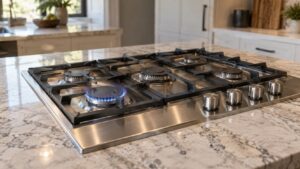
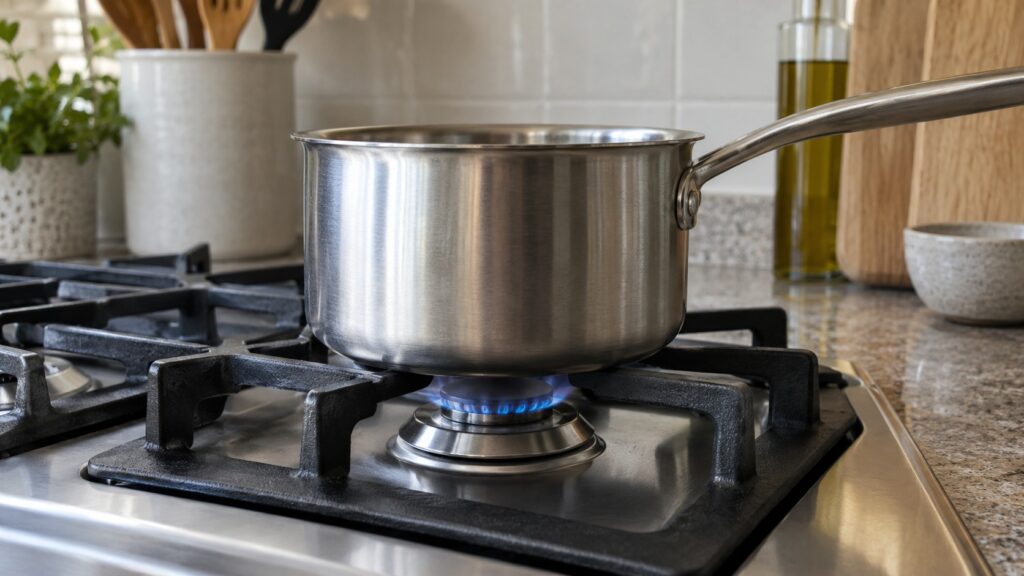
Miele TrueSimmer is the low-temperature simmer control on Miele gas rangetops and ranges that use M Pro Dual Stacked sealed burners. Our model pages list TrueSimmer as the simmer feature on the KMR rangetops and on the HR gas and dual-fuel ranges, and our M Pro burner glossary explains that the two-tier flame design lets one burner deliver very high output for searing and then drop to a low, stable flame for delicate cooking. This guide explains what that means at the stove, which models have it, how to cook with it and what to check when a low flame will not stay lit.
What is Miele TrueSimmer?
TrueSimmer is the name Miele uses for the gentle end of the burner range. On the specification block of the KMR rangetop pages, the line for simmer reads TrueSimmer low-temperature control, and the same line appears on the HR gas and dual-fuel range pages. It exists to solve the problem every gas cook knows: a flame that is steady at high output is often too fierce at the bottom of the dial for a custard, a delicate sauce or melted chocolate, and a flame that is turned too low can go out.
The idea is that you can hold a pot just below a boil, with a few lazy bubbles, without the flame flickering or dying. Our M Pro burners glossary describes the design behind it: two tiers of flame ports, so one burner can produce a strong flame for searing and boiling and also a low, stable flame for melting and sauces.
Which Miele models have TrueSimmer?
The model pages list it on the five KMR gas rangetops we cover (the KMR 1124-3 G, KMR 1134-3 G, KMR 1135-3 G GR, KMR 1136-3 G GD and KMR 1356-3 G GD) and on the HR gas and dual-fuel ranges, such as the HR 1135-3 G AG GR all-gas range and the HR 1956-3 G DF GD dual-fuel range. A rangetop is the cooktop only, with no oven, so it pairs with separate Miele wall ovens. The HR models are freestanding ranges with an oven below. Both use M Pro Dual Stacked sealed burners with output listed up to about 19,500 BTU.
The HR induction ranges, such as the HR 1632-3 I, do not list TrueSimmer. Their pages describe precise low-power induction control instead, which is a different technology. If you are choosing between them, our range versus rangetop guide and the KMR rangetop buying guide explain the formats.
How do you cook with TrueSimmer?
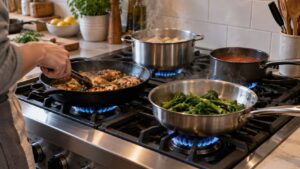
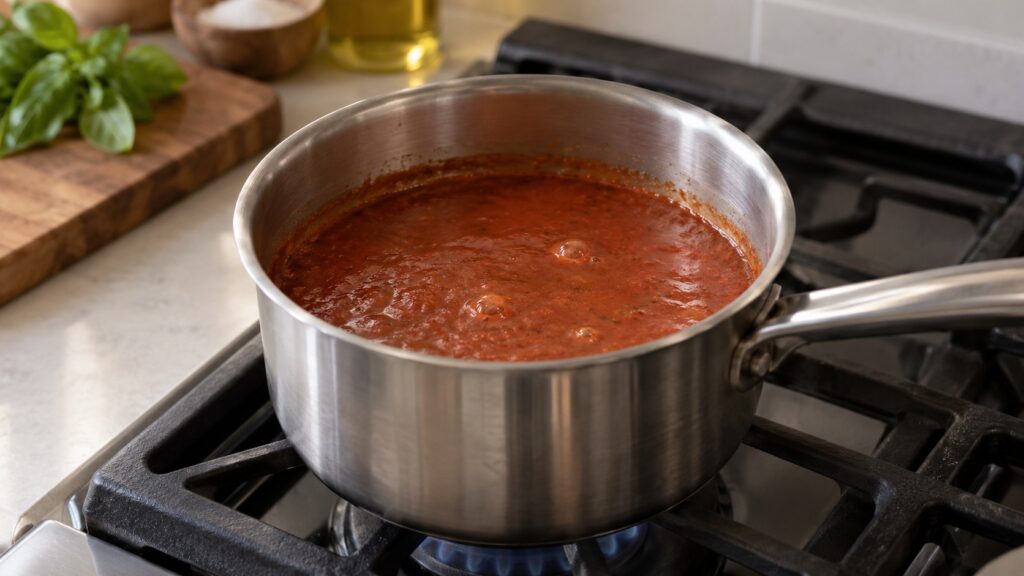
Use it for anything that must not boil: sauces thickened with butter or egg, melted chocolate, braising liquids and rice cooked with the lid on. Choose a pan that matches the burner size, put it on the center of the grate and set the knob to its low position. Watch the surface of the liquid. A simmer is generally a few gentle bubbles rising, not a rolling boil; if there is no movement at all, nudge the control up slightly, and if it boils hard, turn it down.
Because the burner is sealed, spills collect on the top rather than falling into the burner base, which makes it easier to clean, as our gas cooktop burner cleaning guide explains. A clean burner head also keeps a low flame stable, so wipe up boil-overs promptly once the burner has cooled. For more everyday habits, read our Miele rangetop tips.
How does TrueSimmer differ from an induction simmer?
Gas and induction reach a gentle heat in different ways. On the HR 1632-3 I induction range the page lists induction zones with boost and precise low-power induction control; there is no flame, because the cooktop heats the pan directly. On a gas range, TrueSimmer is about the flame itself, so what you see is a small, steady ring of fire under the pan. Both can hold a low heat, but gas gives you something to look at, and the burner needs the airflow and clean ports that induction does not.
If you are weighing the two, our HR range buying guide compares the ranges. Cookware also matters: gas works with any pan that has a flat base that sits stably on the grates, while induction needs magnetic cookware. Do not slide heavy pans across the heavy cast-iron grates, and lift them instead so the finish is not scratched.
What if the TrueSimmer flame goes out or looks wrong?
A low flame is the first to suffer from dirt or a draft. If a burner does not stay lit at its lowest setting, our rangetop burner won’t stay lit guide covers the usual causes. Start with the simple checks: let the burner cool, clean the burner head and ports as the manual shows, make sure the cap sits correctly and keep a strong draft from the hood or window away from the flame.
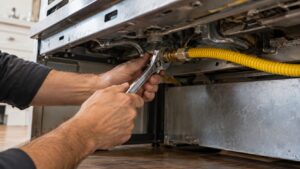
Gas safety comes first. If you smell gas, do not touch any switch or flame: leave the house, and call your gas company or 911 from outside. Do not try to test for leaks yourself. A rangetop that smells of gas, shows a yellow or sooty flame or clicks continuously without lighting should be switched off at the control and checked by a professional. Never take the burner assembly or gas connections apart on your own. Fuel conversion is a separate job: our LP gas conversion guide explains it, and it must be done per the manufacturer’s instructions.
We are an independent repair company, not the manufacturer. Our Miele range repair page explains how a visit works, and you can schedule a visit online.