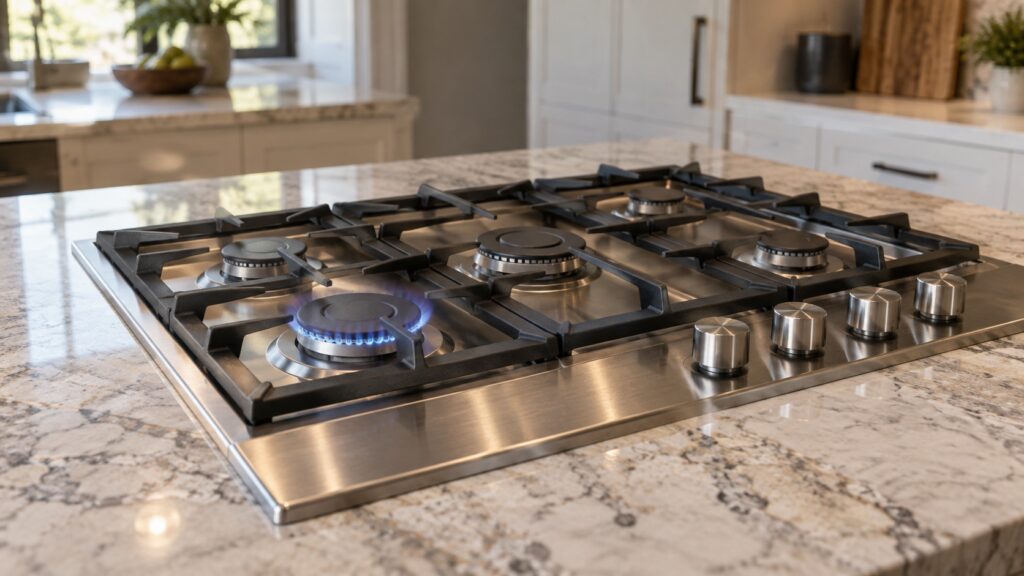
The Miele rangetop repair or replace question is usually answered by what has failed rather than by how old the rangetop is. Ignition electrodes, spark modules, burner caps, valves, knobs and igniter switches are separate, replaceable parts, so a gas rangetop with one failed component is nearly always worth repairing. Replacement becomes the better choice when the cutout or stone around the unit is damaged, when parts for an older model are hard to find, or when several systems fail at once.
Which rangetop faults are worth repairing?
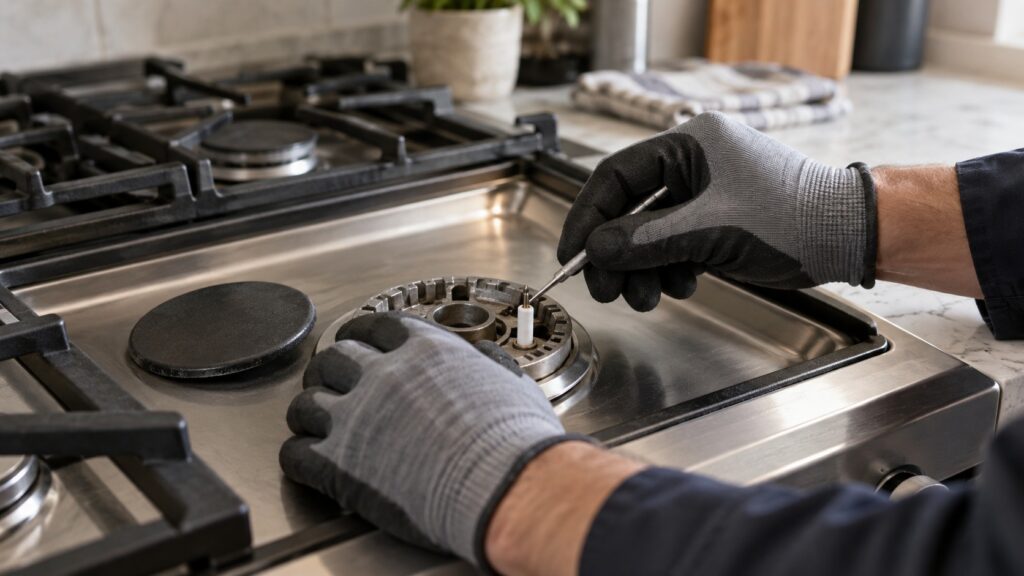
Gas rangetops are repair-friendly because they are made of modules. If one burner will not light, the cause is often an igniter, a spark module or a dirty port, not a fault in the rangetop as a whole. A burner that clicks but does not light, a flame that goes out by itself, or a knob that feels loose or gritty are all contained problems with straightforward fixes. Our guides on a Miele rangetop burner that won’t ignite and one that won’t stay lit show the checks that separate a simple fix from a real fault.
If a burner problem is only dirt, cleaning solves it and no repair is needed. Our guide to Miele gas cooktop burner cleaning explains the right method, and it is the first step before any parts are replaced. When a technician can name the part, show that the fault follows from it and fix it, the rangetop is worth keeping.
When do problems point to replacement?
Replacement makes sense when the problem is the structure of the rangetop, not a component. A body that is warped by heat, a cooktop surface that is corroded or cracked, or a leaking gas connection inside the unit are expensive and sometimes unsafe to repair. Several faults at the same time, such as multiple burners that will not light, a failing control and worn valves, tell you that the rangetop as a whole is at the end of its life.
Parts availability matters for older units. Rangetops are produced for many years, but specific parts for a discontinued series can become hard to source, and a repair that waits for a part for weeks is less attractive. Ask the technician whether the parts for your model are available and how long they will take.
How does the built-in setting change the decision?
A rangetop is installed into a countertop cutout, often in stone, and sits above a cabinet or a drawer bank. That makes replacement more than a swap. A new rangetop must fit the existing cutout, or the countertop must be modified, which is costly and risky for stone. The gas connection, the ventilation above and the clearances all have to match. Our Miele rangetop installation guide lists these requirements.
That is a strong argument for repairing when the fault is modest and replacing within the same model family when it is not. If a replacement of the same width and series is available, the cutout often stays the same. If you change width or brand, plan for the countertop work. Our Miele KMR rangetop buying guide helps you choose a like-for-like model.
What safety signs should stop you at once?
Treat gas smell, a persistent yellow flame, soot, or a clicking that never stops as safety issues. If you smell gas, turn off every burner, do not touch switches or flames, open windows, leave the house and call your gas utility from outside. For other signs, shut off the burner and the gas valve if you can, and call for service. These problems come before any repair-or-replace calculation, and nobody should use a rangetop they suspect is leaking.
If your rangetop was converted between fuel types, keep that history in mind, since a poor conversion can cause flame problems. Our Miele rangetop propane conversion guide describes the conversion, and a technician can check that it was done correctly.
What should you ask before approving a repair?
Ask what failed, how the technician confirmed it and whether the fault could come back. Ask whether any other burner or valve shows wear, because one worn burner often means its neighbors are close behind. Ask how long the part will take and whether the rangetop can be used safely in the meantime, since some faults, such as a single ignition problem, leave the other burners usable, while a gas leak does not. A clear answer to each of these questions is a good sign of a diagnosis you can trust.
It also helps to know how you use the rangetop. A household that cooks every day on all burners will notice a weak unit sooner than one that uses two burners at weekends. If you are planning to sell the home, a working rangetop with clean burners is worth more than one with a visible repair history, and a quick repair may be the better choice before a sale.
How do you decide for your rangetop?
Ask four questions. Is the fault one part? If so, lean toward repair. Is the rangetop in good shape otherwise, with no corrosion, warping or damaged cutout? If so, repair. Are parts available? If not, replacement gains weight. Is a like-for-like replacement available that fits the cutout? If so, replacement is easy when needed. A technician can answer the first three, and your kitchen plans answer the fourth. Our Miele range repair or replace guide is the companion for freestanding ranges.