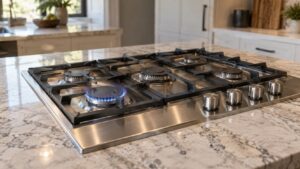
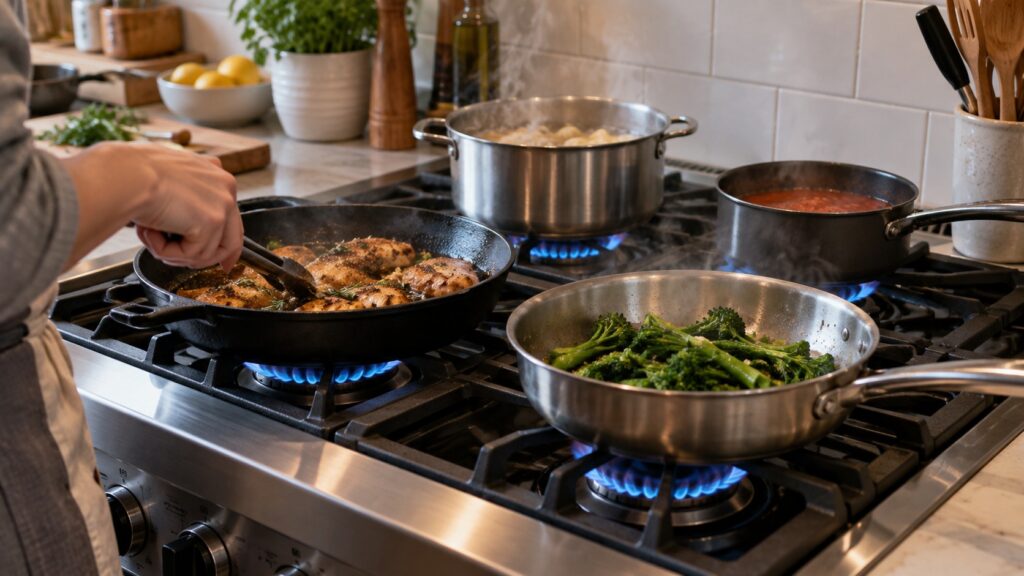
These Miele rangetop tips are specific to a rangetop rather than a cooktop, because a rangetop’s burners, grates and accessories are usually bigger and heavier-duty than a slide-in cooktop’s, and the habits that keep them running well are a little different: matching each pan to the right burner, using the correct grate or wok ring accessory when you have one, working the simmer burner properly for delicate sauces, and keeping every burner cap and port clear so the flame stays even.
Am I using the right burner for the pan I’m cooking with?
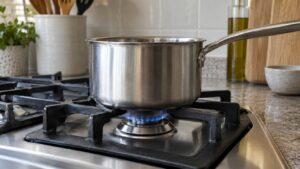
Matching pan size to burner size sounds obvious and is still the single most common thing people get wrong on a rangetop with several burners of different output. A small saucepan set on the largest, highest-output burner wastes heat around the pan’s edges and heats unevenly, while a large stockpot on a small burner takes far longer to come up to temperature than it should. Reserve the largest burner for your largest pans and stockpots, and use a mid-size or the simmer burner for anything narrow — the flame should stay under the pan, not licking up the sides. A rangetop’s burner sizes are usually staggered on purpose, from a high-output burner meant for boiling water quickly down to a dedicated simmer burner, so matching cookware to burner is really about matching the pan to the job as much as to its own diameter.
Do I need the grate or wok ring accessory for round-bottom cookware?
If your Miele rangetop includes a wok ring or a specific grate accessory for round-bottom cookware, use it rather than resting a round-bottom pan directly on the standard grate. A round pan balanced on a flat grate sits unevenly, can rock or tip during cooking, and puts the pan’s curved surface at an inconsistent distance from the flame — the correct accessory holds the pan centered, level and at the right height above the burner, which is the difference between even heat and a pan that scorches on one side. If an accessory that came with the rangetop has gone missing over the years, replace it with the matched part for your model rather than substituting a generic ring, since fit and height above the flame are exactly what the accessory is engineered around.
What’s the right way to use the simmer burner for a delicate sauce?
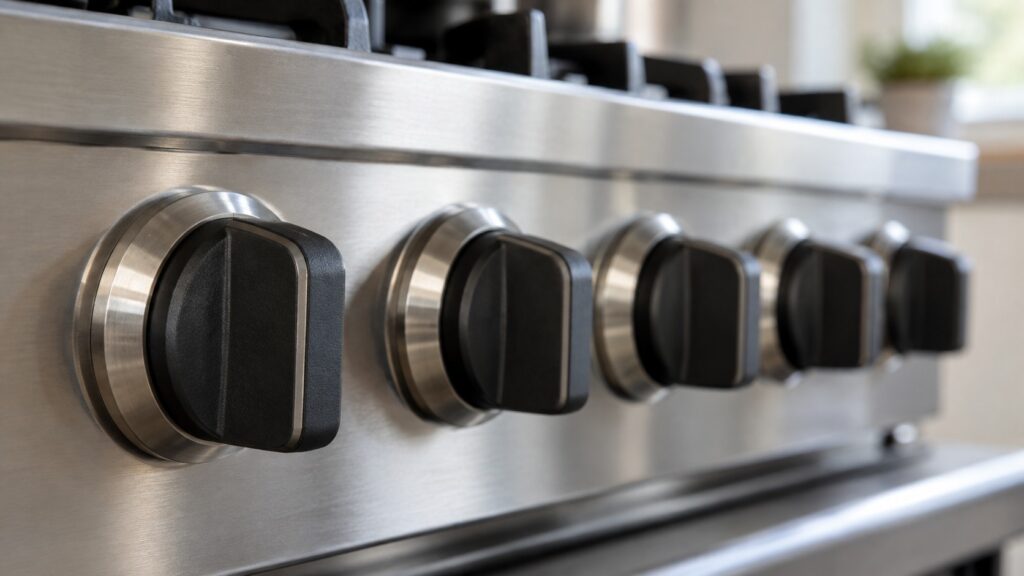
Bring the burner up and then bring it down to its lowest stable setting before the sauce goes in, rather than adding the sauce and then hunting for the right flame level while it is already over heat — a delicate sauce, a custard, or anything with dairy or eggs in it can scorch or separate in the time it takes to find the right knob position by trial and error. Miele rangetop simmer burners are built to hold a genuinely low, steady flame once they settle there; the technique is patience at the start of the process, not constant adjustment during it. Give the flame thirty seconds or so to settle after you turn the knob down before deciding it is unstable and reaching to adjust it again — a simmer burner can take a moment to stabilize at its lowest setting, and repeatedly nudging the knob during that window is the most common reason people end up fighting a flame that was actually about to settle on its own.
Why does my flame look yellow or uneven on one burner?
An uneven or partly yellow flame on one burner, while the others burn a clean blue, is very often nothing more than a clogged burner cap or port rather than a mechanical fault. Food residue, sauce that has boiled over, or grease that has worked into the small ports around the burner cap blocks some of those openings and starves parts of the ring of gas, which shows up as an uneven or yellow-tinged flame at exactly the blocked spots. Clean spills off the burner caps and out of the visible ports as soon as they happen rather than letting them bake on through the next several uses, since baked-on residue is considerably harder to fully clear than a fresh spill.
If a burner has been cleaned and still will not burn evenly or will not stay lit, that has moved past a cleaning issue — our guide to a burner that will not stay lit covers the mechanical causes worth checking next.
How should I clean and reseat the grates?
Lift the grates off for cleaning rather than wiping around them, since spills and grease collect underneath and around the base where the grate meets the rangetop surface — an area that is easy to miss with the grate left in place. When you set a grate back down, make sure it sits flat and does not rock; a grate that has been bent slightly from a heavy pot being set down hard, or one that is simply seated crooked, makes cookware unstable in exactly the way you do not want under a full pot of anything hot.
These habits matter most because a rangetop tends to see heavier, larger cookware than a standard cooktop, so the wear points — burner ports, grates, the simmer burner in particular — see more use over time. Our rangetop installation guide is worth a look if you are setting up a new unit, and our propane conversion guide covers what changes if your rangetop runs on LP rather than natural gas. If you are still choosing a model, our rangetop buying guide covers the lineup.
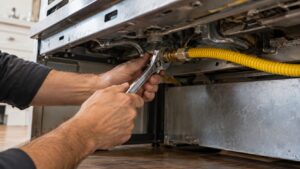
If cleaning and technique do not resolve an uneven flame or a burner that will not stay lit, Miele rangetop repair covers burner, valve and ignition diagnostics, and we confirm the estimate before any work begins — we are an independent repair company, not a factory service arm. Schedule a visit if a burner is still misbehaving after a good cleaning.