Converting a Miele rangetop from natural gas to LP/propane at install time is not a settings change — it is a physical parts swap on every burner plus a regulator change, done with a conversion kit matched to the exact model, and it is not a DIY step because the wrong orifice size on either gas type creates a real flame hazard. If your new rangetop is going into a home running propane and the unit was shipped set up for natural gas, plan for a qualified technician to do the conversion before or during installation, not after. A Miele rangetop propane conversion is a defined, model-specific procedure, not a generic adjustment, and treating it as anything less is where the safety risk comes from.
Why does a Miele rangetop need a different part for propane than for natural gas?
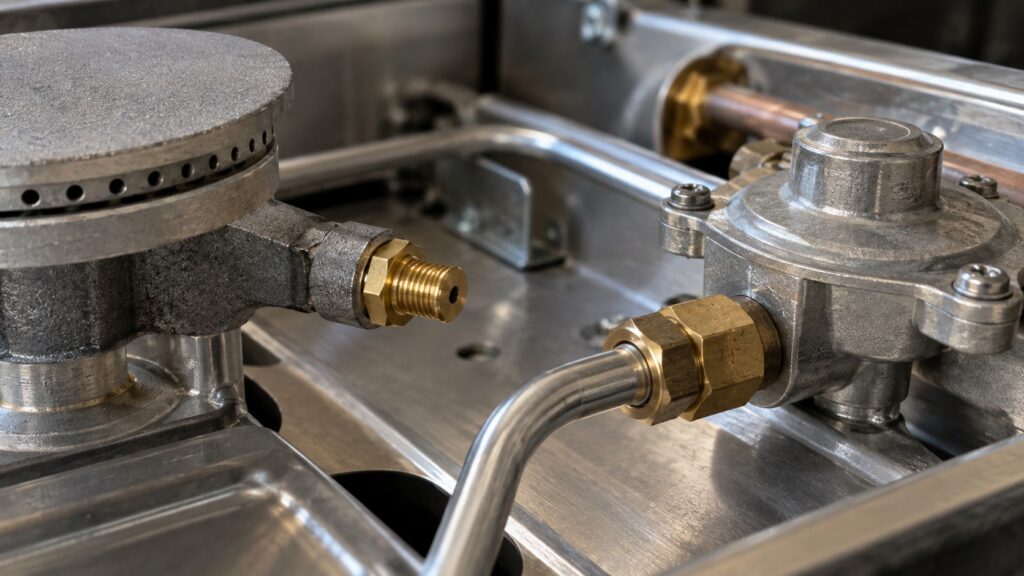
Natural gas and propane are not interchangeable fuels from a burner’s point of view — propane carries more energy per unit of volume than natural gas, so a burner built to draw the right amount of natural gas through its orifice would draw far too much propane through that same opening. The orifice, sometimes called the injector, is sized specifically to meter the correct volume of whichever gas the burner is set up for. That single small brass part is the difference between a burner tuned for natural gas and the identical burner tuned for propane.
What exactly gets swapped during a Miele rangetop LP conversion?
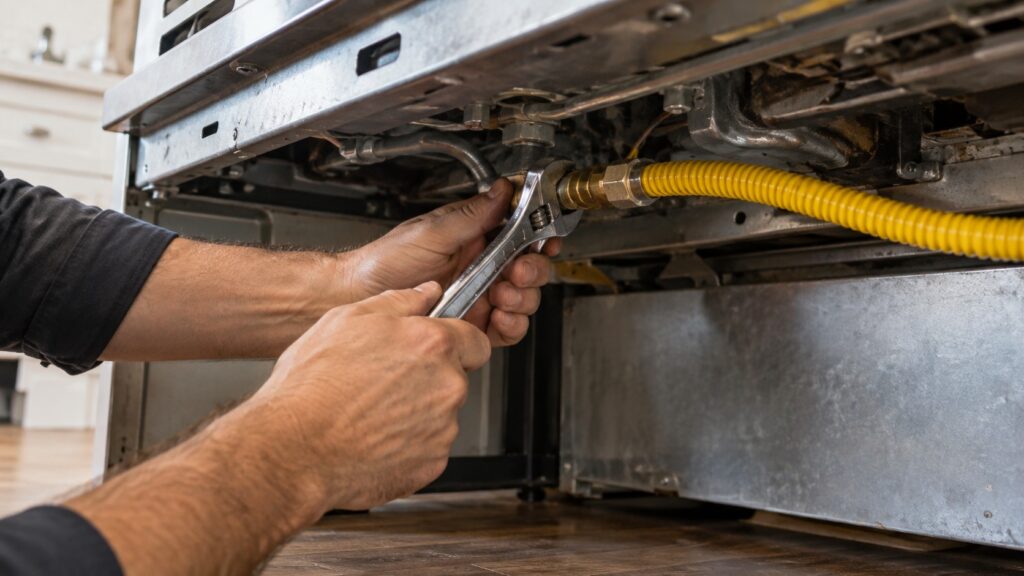
Two things change, and both are called out in the model-specific conversion kit: the orifice at every burner on the rangetop, one at a time, and the gas regulator that controls incoming pressure to the whole appliance. Skipping either half of that swap — changing the orifices but leaving the natural-gas regulator in place, for instance — does not produce a working propane conversion; it produces a rangetop that is only partly converted and will not burn correctly on either fuel.
Every burner on the rangetop gets its own orifice change, not just the largest or most-used one, because each burner size on a multi-burner rangetop is typically drilled to a slightly different diameter even within the same fuel type, and a conversion kit accounts for that by supplying a matched set rather than one universal part.
Can I use a generic LP conversion kit instead of the Miele-specific one?
No. The correct orifice size is specific to the burner design on that exact rangetop model, not to propane conversions in general, and a generic kit sized for a different brand’s burners will not deliver the right gas volume even though it may physically fit. The kit has to match the model, which is one of several reasons this is not a step to improvise with parts on hand.
Why is an LP conversion not a safe DIY step?
A wrong orifice size in either direction creates a real hazard rather than just a weak flame. Too large an opening on propane delivers more fuel than the burner is designed to burn cleanly, producing a flame that runs too rich, with incomplete combustion and excess carbon monoxide. Too small an opening starves the burner, producing a flame that runs too lean and can lighten off unevenly or fail to stay lit. Neither outcome is something you can safely judge by eye from the size of the flame alone, which is exactly why this conversion is done by a qualified technician working from the model’s own conversion instructions and gas-pressure specifications, not by trial and error.
The regulator adjustment carries its own risk too: incoming gas pressure has to land within a specific range for the appliance to operate safely, and that pressure is normally checked with a manometer as part of the conversion, not assumed. A pressure reading outside the specified range can produce the same rich-or-lean flame problems as a wrong orifice size, which is exactly why the two checks are done together rather than treating the orifice swap as the whole job.
Can a Miele rangetop be converted back to natural gas later?
Yes. The conversion is not a one-way modification — moving a rangetop from a propane home back to natural gas means reinstalling the original natural-gas orifices at each burner and swapping the regulator back, the same physical procedure run in the opposite direction. Keep the original natural-gas parts if you convert to propane, since some kits are sold as an exchange rather than a bundle that includes both sets, and not every technician will have natural-gas orifices for your specific model on hand if you move the appliance later.
The same safety logic applies either direction: a rangetop moving from propane back to natural gas needs its regulator and every orifice checked and swapped by a qualified technician, with a manometer pressure check afterward, rather than assuming the reverse swap is simpler because it is “going back” to the factory setup.
Does the conversion happen before or after the rangetop is installed?
Either can work, but doing the orifice and regulator swap before the final gas connection is made is the more common sequence, since it lets the technician confirm every burner lights correctly and burns with the right flame characteristics on propane before the appliance is permanently plumbed in. Our general rangetop installation guide covers the cutout, gas line, power and ventilation requirements that apply regardless of fuel type — the LP conversion is an addition to that process on a home running propane, not a replacement for the rest of it.
What should I ask before buying a Miele rangetop for a propane home?
Confirm with whoever sells or installs the rangetop that the LP conversion kit for your exact model is available and that installation includes the conversion, the orifice swap on every burner, and a pressure check with a manometer — not just the standard natural-gas setup. Our Miele rangetop buying guide covers choosing between models before you get to fuel-type questions, and once the rangetop is running, our rangetop tips cover day-to-day burner care that applies on either gas type.
If a rangetop already installed on propane is burning unevenly, will not stay lit, or shows a flame that looks too yellow or too small, do not assume it is a normal quirk of propane — a burner that will not ignite is worth reading, and it may point at a conversion that was never finished correctly. Miele rangetop repair covers burner and regulator diagnostics on either fuel, and we confirm the estimate before any work begins. Schedule a visit if you suspect the conversion on your unit was not done completely.