Miele dryer filter cleaning means two jobs on the T1 heat-pump dryers our site covers: clean the two FilterClean fluff filters in the door area after every load, and rinse the secondary fine filter when the dryer prompts you to and let it dry fully before it goes back. These filters are the first defense against the airflow problems behind slow drying and the F66 code. The heat exchanger in the base is a separate job with its own guide, and the exact steps for taking each filter out are in your owner’s manual.
How often should you clean the Miele dryer filters?
Our heat-pump dryer guides give a clear rhythm. The two FilterClean fluff filters in the door area are cleaned after every load, and our dryer tips guide calls that the single best habit for keeping a T1 dryer drying quickly. The secondary fine filter is rinsed when the dryer prompts you, so watch the display for that prompt instead of working to a calendar. Fluff that escapes the first filters lands deeper in the machine, which is why the schedule matters.
This is a heat-pump dryer, which recirculates air across a heat exchanger instead of venting outside. Our heat-pump guide explains that lint which gets past the filters ends up on the exchanger fins and chokes the airflow. That is why a quick wipe of the filters after each load is worth more than an occasional deep clean. Our Miele dryer tips guide lists the other small habits that go with it.
How do you clean the fluff filters and the fine filter?
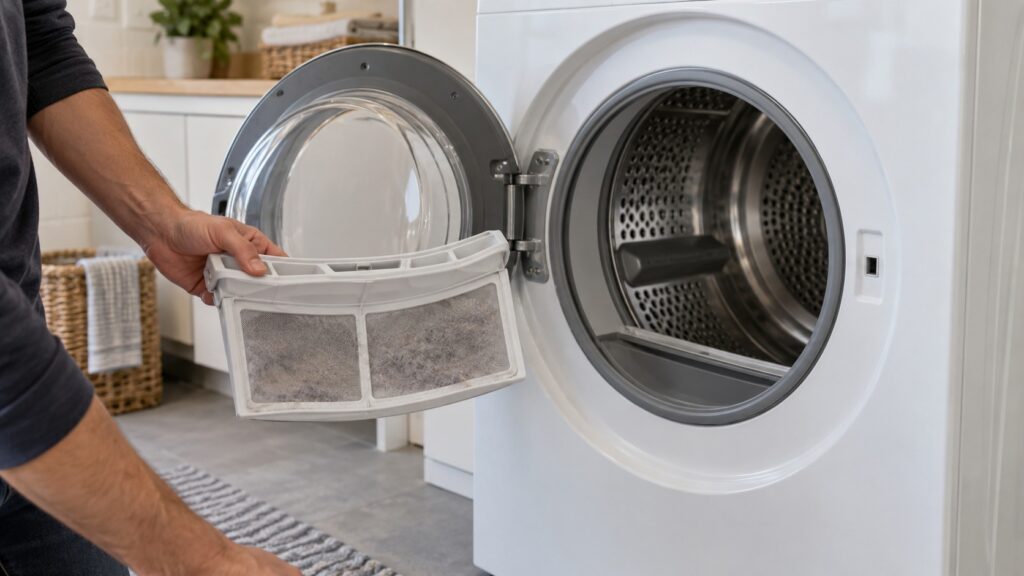
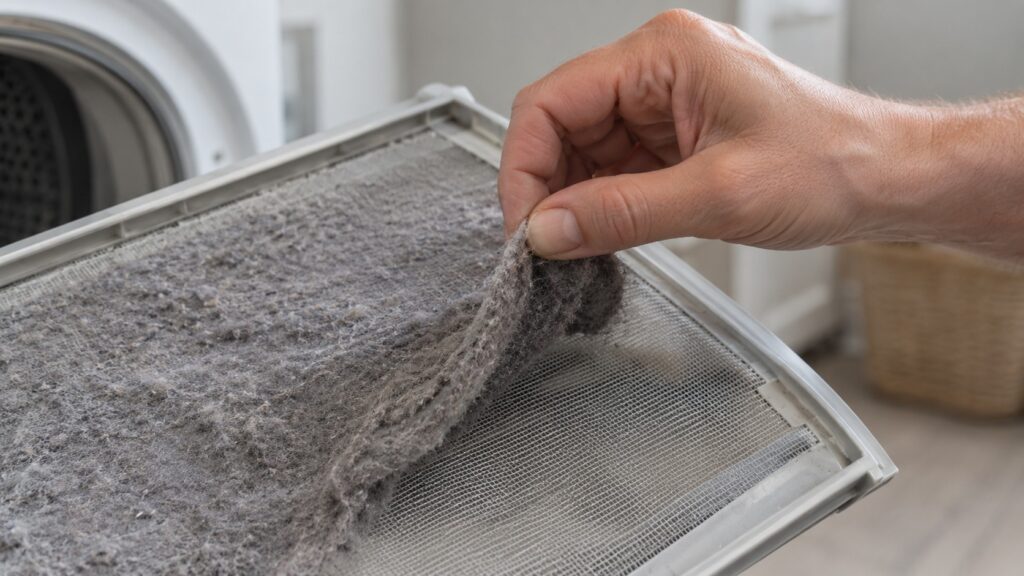
Take out the two fluff filters in the door area and remove the layer of lint by hand, then wipe away any fluff left in the filter recess and the lint chamber. Rinse the secondary fine filter under a tap when the dryer prompts for it, and let it dry completely before you refit it. Put every filter back exactly as the manual shows. We do not describe how each filter is released or which way it is turned, because the method differs between models and the manual has the drawings.
Wipe the door seal as well. Our maintenance guide lists wiping the door seal and the lint chamber so that fluff does not migrate deeper into the cabinet. Do not use sharp tools to scrape a filter, and run the dryer only with the filters fitted as the manual shows. If a filter is torn, cracked or will not seat properly, stop and call us instead of improvising.
What does the filter prompt on the display mean?
Our guides say the dryer prompts you when the secondary fine filter needs rinsing. They do not describe the symbol or the exact wording on every model, so use your manual’s display section to read it. Searches such as miele dryer filter light, filter clogged and clean airways all point at the same family of messages. If a prompt keeps returning right after you have cleaned and refitted every filter, check that the filters are seated properly and fully dry, then see our Miele dryer F66 airflow guide.
F66 is described there as the most common problem on the T1 heat-pump dryers and almost always a restricted airflow, which is a maintenance job rather than a broken part. A dryer with clean filters that still shows the code may have lint deeper in the air path, and that needs a technician. Do not open the base or the back to look for it unless your manual describes it.
What about the heat exchanger and the rest of the airflow?
The filters are only one part of the airflow. Our heat-pump dryer heat exchanger cleaning guide covers the base and the exchanger fins, which are the next place lint collects. Give the dryer room to breathe too: our installation guide says to leave clearance around the unit so it can draw and reject air, and not to seal it into an unventilated cupboard. If clothes come out damp even with clean filters, read Miele dryer not drying.
Do not overload the drum. Our tips guide says clothes need room to tumble for the air to reach them, and that a high spin in the washer sends less water to the dryer.
If your dryer is plumbed to a drain, or you empty a condensate container after each load, that is a separate routine from the filters. Our empty container guide explains the prompt, and it is worth checking the container at the same time as the filters so the two chores become one habit at the end of every load.
When should you call a technician?
Call if the dryer still shows F66 or F55 after the filters are clean and dry, if a filter is damaged, if there is a burning smell or if the dryer will not run. If you see smoke, switch the dryer off at the breaker panel and keep the door closed. Do not open panels or reach into the cabinet. Our Miele dryer repair page explains how a visit works.