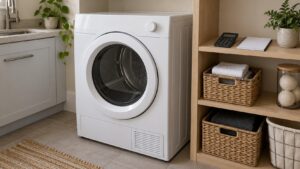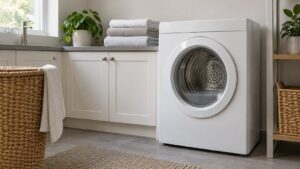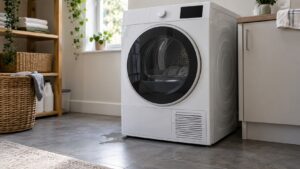
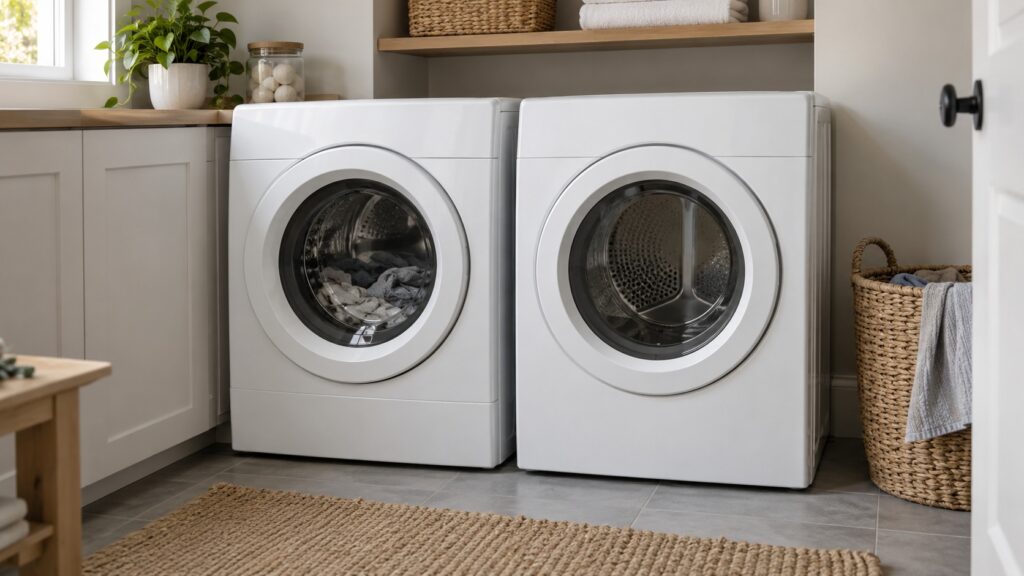
How a Miele condenser dryer works: instead of blowing hot, wet air out through a vent, it keeps the air inside the machine, cools it so the water in it turns back into liquid and collects that water in a container or sends it down a drain. The dried air is then warmed again and sent back through the drum. Every Miele dryer on our site is a ventless T1 heat-pump dryer, which does the condensing with a heat pump and a heat exchanger, so the explanation below uses those models, with the general idea of a condenser dryer for context. Details for your exact model are in your owner’s manual.
What is the difference between a condenser dryer and a vented dryer?
A vented dryer heats air, passes it through the wet clothes and blows the damp air outside through a duct. A condenser dryer does not need a duct, because it removes the moisture from the air inside the machine. That is why it can be installed in a closet, a laundry alcove or an apartment where venting through a wall is not possible.
The trade-off is that a condenser dryer depends on its own parts to remove moisture. A filter that is clogged or a heat exchanger covered in lint does not just slow drying, it stops the machine from removing water properly. That is why the care routine of a condenser or heat-pump dryer centers on the filters and the exchanger.
How does the air loop work step by step?
First, warm air passes through the drum and picks up moisture from the clothes. Second, that warm, humid air goes through the filters, which catch lint. Third, the air flows through a heat exchanger, where it is cooled. Cool air cannot hold as much water as warm air, so the moisture condenses into liquid. Fourth, the water is collected, and the now drier air is warmed again and returned to the drum. The loop repeats until the dryness sensor says the load is dry.
Our model pages list the sensor on the T1 dryers as PerfectDry conductivity sensing, and the drum as a patented Honeycomb drum. How those parts work and what the cycle options are on your model is in the manual, and we do not give temperatures or times.
What does the heat pump add?
A heat pump is a way to do the warming and the cooling with one system. Our guide to how Miele heat-pump drying works describes a heat pump that recirculates the drum air through a heat exchanger instead of venting it outside. In general terms, a heat pump reuses the heat taken out of the humid air to warm the air going back to the drum, so less heat is wasted; how your model does it is in the manual. The pages say it dries at lower temperatures, which is gentler on fabrics, and that it needs no external vent and runs on an ordinary 120V and 15A outlet, not a 240V dryer circuit.
Where does the water go?
To a condensate container, which you empty after each load, unless the dryer is plumbed to a drain. Our dryer empty container guide says an empty container message is normal, and that if it returns straight after you empty the tank, you should check that the float in the tank moves freely and that the tank is seated fully. On plumbed models, a drain hose or condensate pump that is blocked can cause the same message. Wipe the tank and its recess, and keep the tank seated fully, as the manual describes.
A tip: pour the water out, but do not drink it or use it on food. Condensate from a dryer is not drinking water.
Which parts need cleaning, and why?
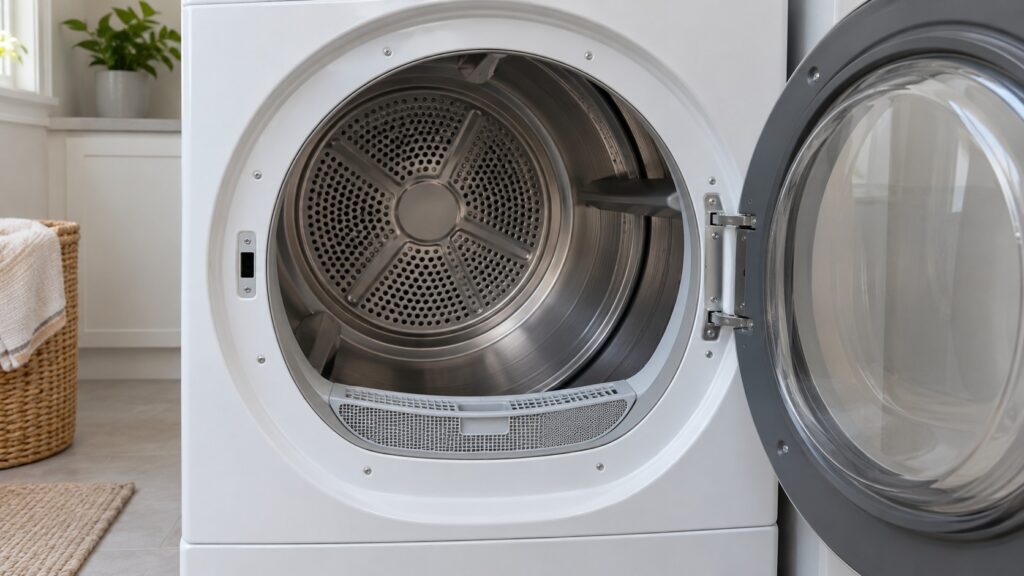
Lint is the enemy. It collects first in the filters and then, if it gets past them, on the heat exchanger fins, where it chokes airflow. Our heat exchanger cleaning guide says the FilterClean filters and the heat exchanger need regular cleaning to keep the heat pump efficient, and that keeping both clear prevents F66 airflow problems and the slow drying that otherwise creeps in. Clean the filters as your manual shows. Do not run the dryer without them, and do not open the cabinet.
The heat exchanger may sit behind a cover, and its cleaning steps vary by model, so follow your manual and stop if the steps need tools or involve the refrigerant system. The sealed heat pump is never an owner’s job.
What does slow drying tell you?
Usually the air is not moving or the moisture is not being removed. Check the filters, the heat exchanger, the container and the load: an overloaded drum does not let air through the clothes. Our Miele dryer not drying guide lists the checks in order, and our F66 airflow guide covers that code. If the dryer smells of burning, switch it off at the breaker while standing on a dry floor, and do not use water. We are an independent repair company, not the manufacturer. Our Miele dryer repair page explains how a visit works, and you can book a visit online.