Miele PerfectDry is the name our model pages give to the dryness sensing on the Miele T1 heat-pump dryers. The pages list it as PerfectDry conductivity sensing, and our repair pages also call the part a humidity sensor. It is the system that tells the dryer when the laundry has reached the dryness level you chose, so the cycle can end. It is not a drying method and not a program: the drying itself is done by the heat pump, which our pages call EcoDry.
What does Miele PerfectDry mean?
It means the dryer measures dryness instead of simply running for a set time. Our model pages list “PerfectDry conductivity sensing” under the dryness line for every T1 heat-pump dryer. The name points to a measurement of how well damp laundry conducts electricity, which changes as the water leaves the fabric. Our pages do not describe the sensor hardware beyond that, so we leave the detail to the owner’s manual.
The practical meaning is simple. You choose a dryness level, and the dryer ends the cycle when the sensing says the load has reached it. A dryer that ends cycles too early or too late is therefore worth a look at the sensing, after you rule out the easier causes.
Which Miele dryers have PerfectDry?
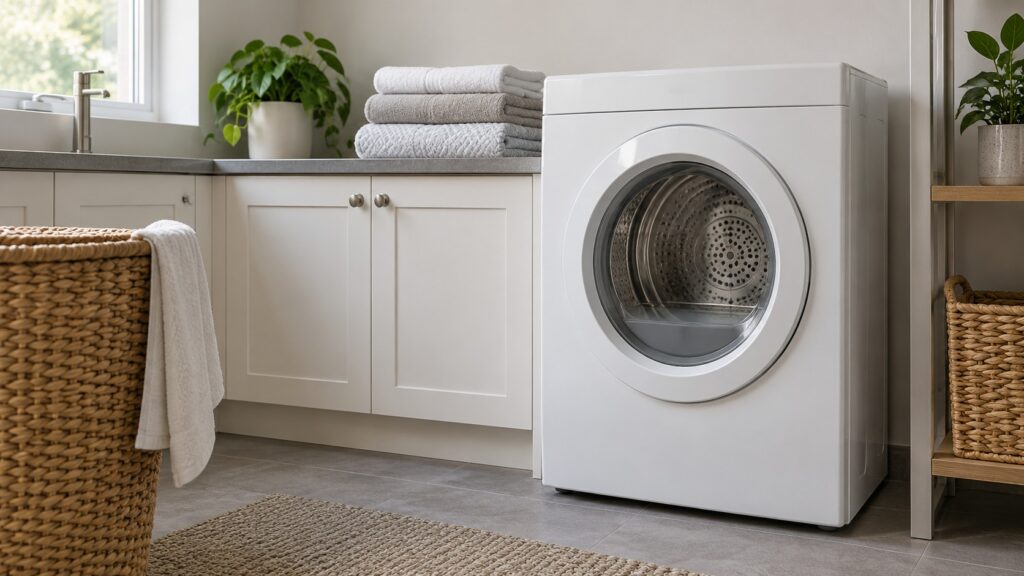
All six T1 dryers on our site list it: the TWB120 WP, TWF160 WP, TWI180 WP, TXD160 WP, TXI680 WP and TXR860 WP. They are 24-inch, front-load, ventless heat-pump dryers on a 120V/15A supply with the Honeycomb drum. What differs is the extras.
Our pages list DirectSensor and M Touch as the control types without describing how they work. See the manual for your model for the details.
How is PerfectDry different from EcoDry and the heat pump?
EcoDry is how our pages label the drying method: heat-pump, ventless. Our explainer on how Miele heat-pump drying works says the dryer recirculates air through a heat exchanger instead of venting it, which is why it needs no duct and plugs into a standard outlet. PerfectDry has a different job. It decides when to stop. A heat pump with a faulty sensor can still dry; it just may not stop at the right moment.
What are the signs that dryness sensing is the problem?
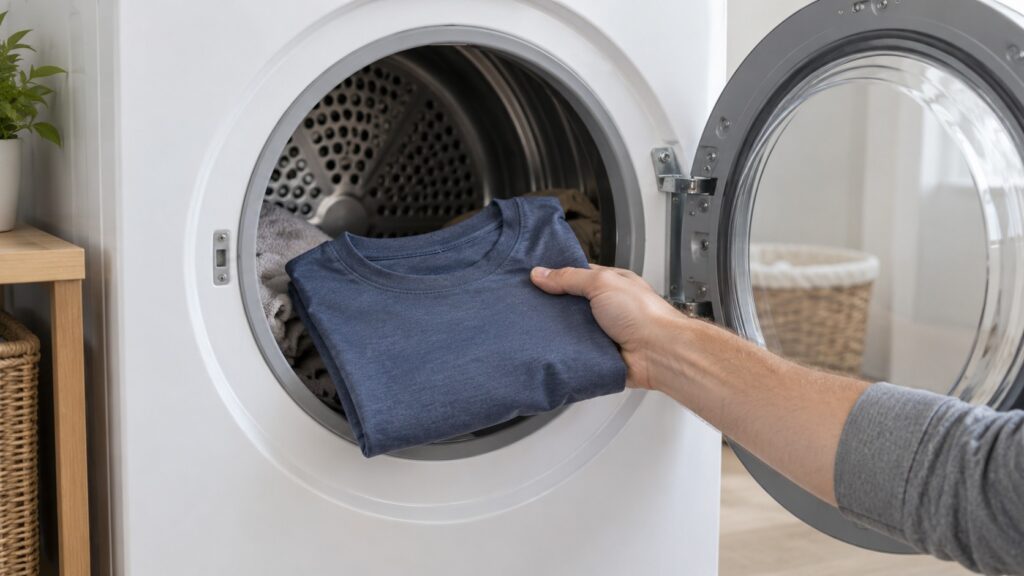
Two patterns stand out. Cycles that end early and leave laundry damp, and cycles that run long even though the clothes feel dry. Our repair pages say a failed humidity sensor, which they call PerfectDry, can end cycles early or run them long. Our heat-pump dryer pages also list F55 as a dryer that is not dry after 180 minutes and F66 as an airflow or ventilation problem.
Neither is proof of a sensor fault. A heat-pump dryer is sensitive to airflow, so the first checks are always the simple ones. Clean both FilterClean fluff filters, empty the condensate container or check the drain connection, do not overload the drum and make sure the washer spun the load fully. Our dryer not drying guide and dryer tips guide cover those habits, and the F66 airflow guide covers the airflow code.
Before you call, make a short note that will save time on the visit. Write down the model number from the rating plate, the dryness level you selected, how large the load was, whether the clothes were well spun in the washer, and whether the problem happens on every cycle or only on some. A dryer that misjudges only mixed loads of heavy towels and thin shirts is behaving differently from one that misjudges every load, and that detail helps a technician narrow the cause quickly.
It also helps to try one cycle with a smaller, uniform load of similar fabric after you have cleaned the filters. If the result is normal, the original load or the airflow was the cause, and the sensing is probably fine.
What should you leave to a technician?
Anything inside the machine. Do not open the cabinet, remove panels or try to test the sensing yourself. Our repair guides describe a humidity sensor as a moderate part-and-labor job. A technician can tell whether the sensing is at fault or whether the cause is airflow, the heat exchanger, the condensate path or the sealed heat pump, and that diagnosis is the point of a visit.
If the dryer smells of burning, shows smoke or trips a breaker, switch off its breaker at the panel while standing on a dry floor and do not use it until it has been checked.
What related terms appear on the same pages?
You will see several other names next to PerfectDry. FilterClean refers to the fluff filters. The Honeycomb drum is explained in our Honeycomb drum glossary. SteamFinish is listed on the TWI180 WP, TXI680 WP and TXR860 WP as wrinkle release; our pages give no further description, so check the owner’s manual for what it does. FragranceDos is a single-dose scent option. Each is separate from PerfectDry and none changes how dryness is sensed.
We are an independent repair company, not the manufacturer. If a T1 dryer misjudges dryness after the basics are covered, Miele dryer repair starts with a diagnostic visit, and we confirm the estimate before any work begins.