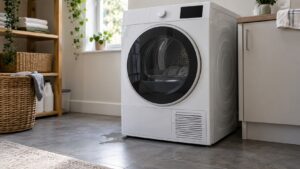
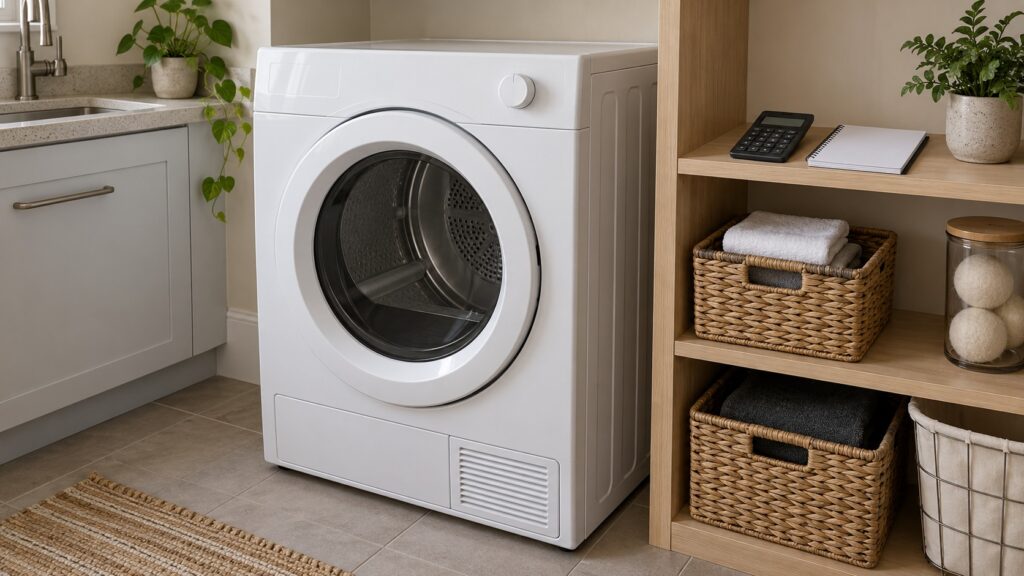
A Miele dryer compressor problem sits in the sealed heat-pump system of a T1 dryer, and that is the one kind of T1 repair that can tip the decision toward replacing the machine. Our dryer repair-or-replace guide says an airflow problem, a fan or a sensor on a sound T1 almost always favors repair, while a sealed heat-pump (refrigerant) problem on a much older unit is the case that can tip toward replacement. Before anyone talks about a compressor, rule out the far more common causes: clogged filters, a blocked heat exchanger, a full condensate container and an overloaded drum.
What is the compressor in a Miele heat-pump dryer?
Our model pages list the T1 dryers, such as the TWI180 WP, as 24-inch, ventless heat-pump (EcoDry) dryers that plug into a 120V/15A outlet, with no 240V circuit or exhaust duct required. Our explainer on how Miele heat-pump drying works says a heat-pump dryer uses a closed refrigerant loop to extract moisture from the drum air, condense it and reuse the heat.
A heat pump of that kind contains a compressor, the part that drives the refrigerant around the loop. Our pages refer to the whole assembly as the sealed heat-pump system and do not list its parts one by one, so we do not either. What matters for you is the label: a fault in that sealed system is specialist work, not a filter job.
How can you tell it is not just airflow?
Most T1 complaints are about air. Our dryer not drying guide says damp clothes on a T1 usually mean clogged FilterClean filters, a lint-blocked heat exchanger or an overloaded drum, not a broken heat pump. The checks that are safe for you are the ones you can do without opening the machine: clean both FilterClean fluff filters and rinse the fine filter, empty the condensate container if you are not plumbed to a drain, split large loads and make sure the washer spun the load fully. See our dryer not drying guide and dryer tips.
Heat exchanger care is covered in our heat exchanger cleaning guide; follow your owner’s manual for how to reach it on your model, and do not remove panels beyond what the manual shows. Codes help too. Our pages list F55 as not dry after 180 minutes and F66 as an airflow or ventilation problem, and our F66 airflow guide explains the airflow code. If the filters, the exchanger and the container are clear and the dryer still barely dries, the remaining causes include the dryness sensing, a fan and, last, the sealed heat-pump system.
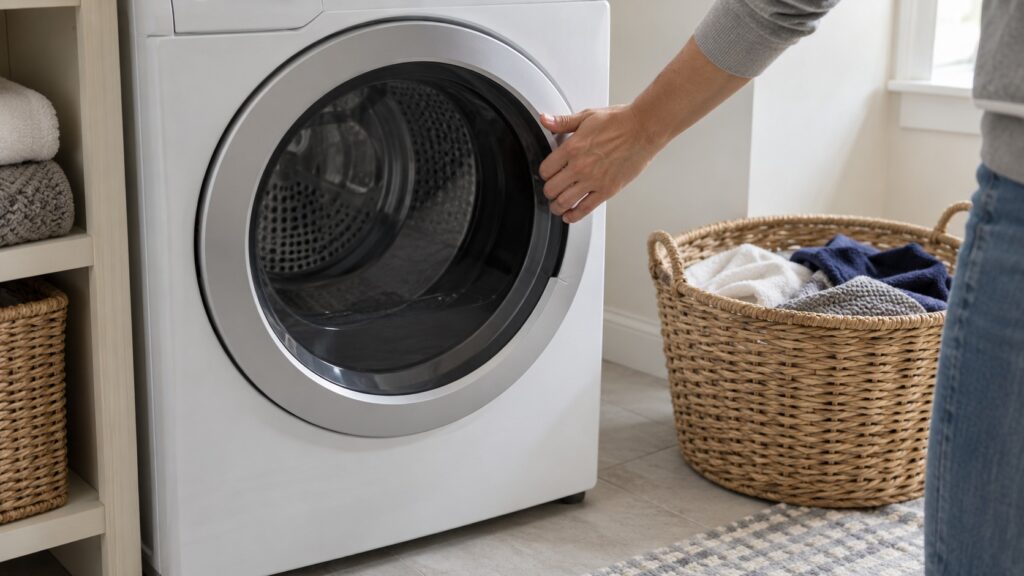
What does a technician check before blaming the compressor?
The same list in order: airflow, filters and the heat exchanger, the condensate path, the fan and the dryness sensing, then the sealed system. A good technician explains what was tested, what it showed and why the conclusion follows. Ask for that. Our repair cost guide says the price tracks the part: an airflow clean sits at the low end, a humidity sensor is a moderate job, a fan or control board sits higher and a sealed heat-pump repair is the top tier. See also our dryer repair cost guide.
Do not try to test the heat pump yourself. It is a sealed refrigerant system. If the dryer smells of burning, shows smoke or trips a breaker, switch off its breaker at the panel while standing on a dry floor and keep it off until a technician has looked at it.
When does repair make sense?
When the dryer is otherwise sound. Our repair-or-replace guide leans toward repair for an airflow problem, a process fan or a humidity sensor on a unit that is only a few years old, and when the dryer dries well once the air path is clean. It adds that a confident diagnosis before the decision is worth having, because many appliances written off as dead need only a common part. A part swap is usually far cheaper than a new dryer, but a sealed-system repair is the exception that needs real thought.
When does replacement make sense?
When the sealed heat-pump system has failed on a much older unit, or when several problems appear together and suggest the dryer is near the end of its life. Weigh the age of the machine, whether parts are readily available and whether you want the features of a newer model. Our site does not give a single lifespan for T1 dryers, and we do not quote one. Use the written diagnosis and the quote, and compare them with the price of a new dryer. Our Miele dryer repair or replace guide sets out the full list of factors.
If you replace a T1 with another heat-pump dryer, remember the practical differences from a vented one: no duct, a standard outlet and either a condensate container to empty or a drain connection.
What should you ask before you decide?
Ask which part failed and how that was confirmed, whether the fault is the sealed system or something that controls it, whether other parts are likely to follow and what the written estimate includes. We are an independent repair company, not the manufacturer, so if a repair is not worth doing we will say so. Miele dryer repair starts with a diagnostic visit, and we confirm the estimate before any work begins.